The Breath of Garda: The Valley and Villages of the Mincio and The Morainic Hills

🌊 Born from ancient ice, the landscape south of Lake Garda still carries the memory of its glacial past. The Mincio River flows out of the lake at Peschiera, tracing the natural continuity between the alpine basin and the Po Valley — a thread of living water connecting mountain, lake, and plain.

🏞️ Around it rise the morainic hills, gentle and fertile arcs of earth shaped by the retreating glacier that once filled this entire valley. Together, river and hills form a vast amphitheater where nature and history intertwine.

🏰 Along the Mincio’s path stand medieval villages, fortresses, and vineyards — from Borghetto and Valeggio to Solferino and Cavriana — guardians of stories written by water, stone, and time.

🚶‍♀️🚴‍♂️ This is a landscape to be walked, cycled, and breathed: geological, rural, and cultural at once — the living soul of southern Garda.

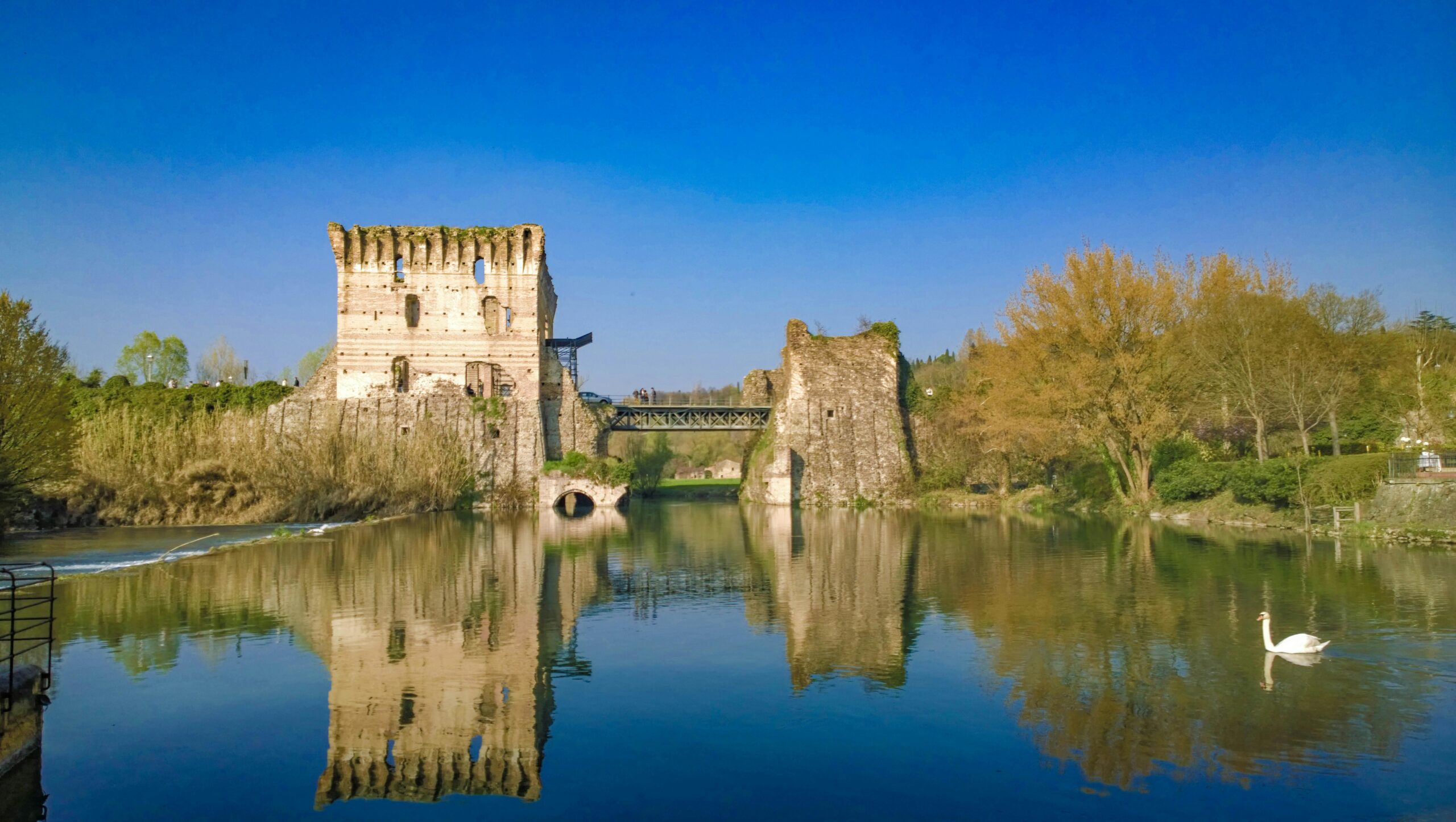
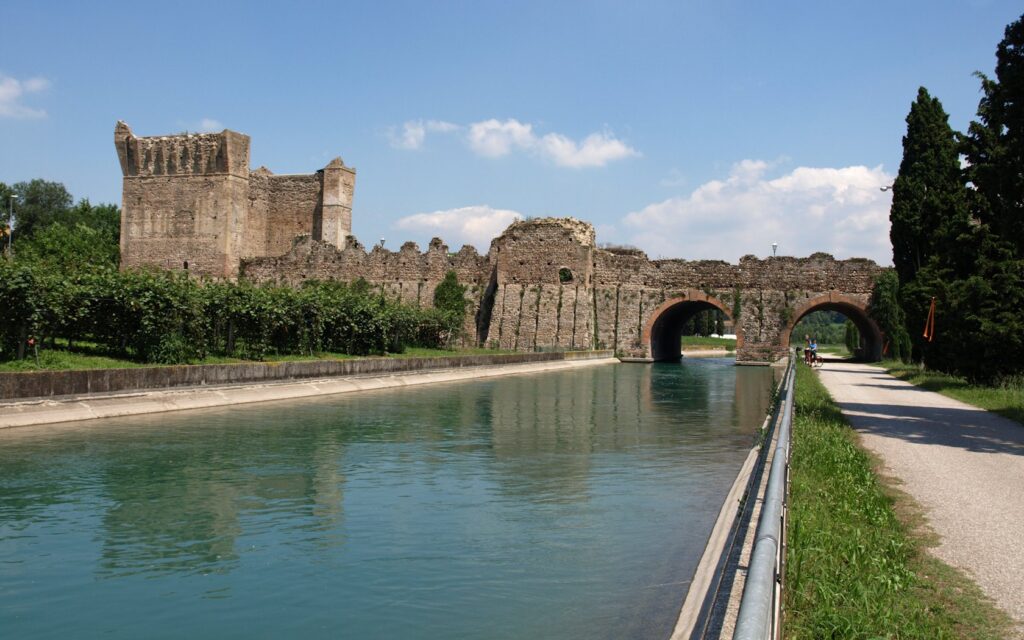
Medieval Damn at Borghetto Sul Mincio

INTRO

🌾 The Morainic Hills of Lake Garda

Between Lake Garda and the Mantuan plain lies a landscape of gentle, rolling hills — the Morainic Hills of Garda.
Shaped thousands of years ago by the retreat of the great glacier that once filled the lake basin, these hills form a unique mosaic of vineyards, olive groves, medieval villages, castles, and small woods.

This is a land where history and nature intertwine, where the pace of life still follows the rhythm of the countryside.
It’s best explored slowly — by bike, on foot, or along quiet country roads — following winding lanes bordered by cypresses and stone walls, discovering churches, fortresses, and old farmsteads scattered across the green amphitheatre that embraces the southern shores of Lake Garda.

🌿 Mincio River Park (Parco del Mincio) — the protected natural area following the Mincio River from Lake Garda to Mantua.

VILLAGES AND TOWNS

👉 Click on the markers to learn more


🏰 Villages and Towns to Discover


The Morainic Hills are dotted with charming villages, each preserving its own history, traditions, and timeless beauty. Exploring them feels like travelling through centuries of rural life and noble heritage.

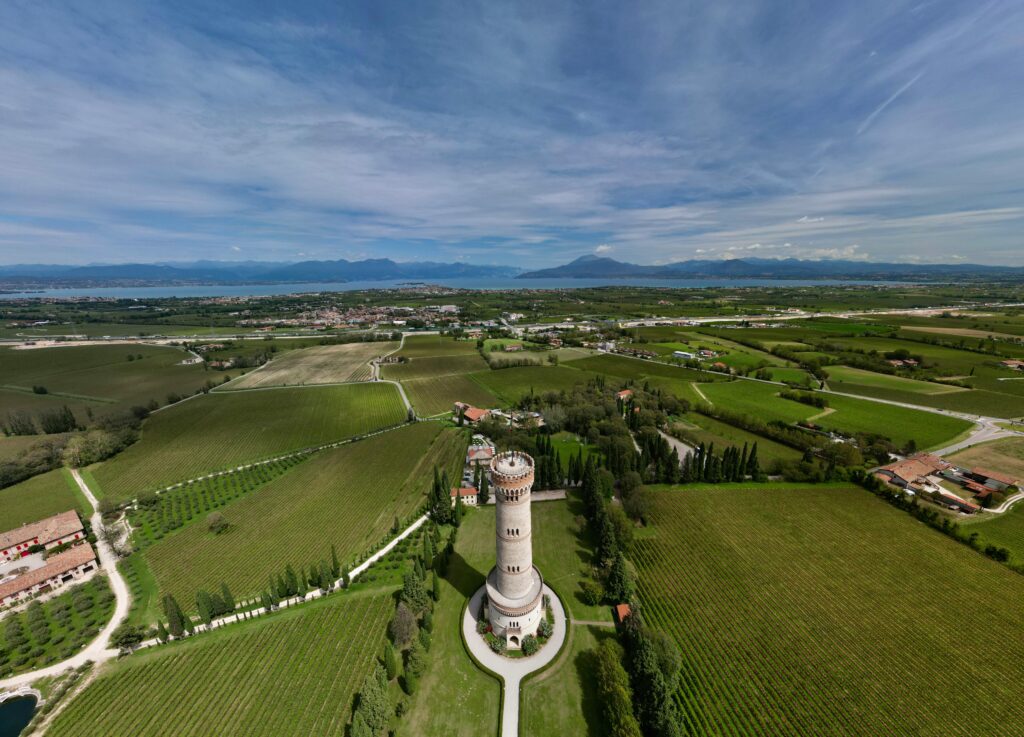
  • San Martino della Battaglia – On the outskirts of Desenzano, surrounded by Lugana vineyards. The monumental tower of the Italian unification offers a breathtaking 360° view of the lake and the plains.

  • Pozzolengo – An authentic agricultural village crowned by a medieval castle; the heart of Lugana wine production.

  • Lonato del Garda – Overlooking the western part of the morainic amphitheatre, this lively town is known for the imposing Rocca fortress and its panoramic views over Lake Garda. The hills around Lonato are covered with vineyards, olive groves, and ancient farmhouses.

  • Ponti sul Mincio – A fortified village marking the northern entrance to the Mincio Park and the cycle path toward Mantua.

  • Monzambano – Overlooked by a medieval castle, this peaceful town is surrounded by vineyards and green hills, ideal for walks and bike rides.

  • Salionze – A small rural hamlet along the Mincio, peaceful and immersed in nature; a perfect stop along the Peschiera–Mantua cycle path.

  • Valeggio sul Mincio – Known for its tortellini, the Scaliger Castle, and the stunning Sigurtà Garden Park, one of Europe’s most beautiful botanical gardens.

  • Borghetto sul Mincio – A fairytale riverside village with ancient mills, stone houses over the water, and the impressive Visconti Bridge.

  • Castellaro Lagusello – Listed among “The Most Beautiful Villages of Italy”, with a perfectly preserved castle and a small heart-shaped lake.

  • Solferino – A place of memory and heroism, known for its fortress and the origins of the Red Cross after the 1859 battle.

  • Castiglione delle Stiviere – The historical and spiritual heart of the Morainic Hills, birthplace of Saint Luigi Gonzaga and home to the International Red Cross Museum. Its elegant old town and gentle hills blend history, faith, and nature.

  • Cavriana – An ancient Lombard settlement with a panoramic tower and the Archaeological Museum of the Upper Mantuan area.

  • Volta Mantovana – An elegant hilltop town with Renaissance villas, terraced gardens, and sweeping views of the Mincio Valley.
  •  

From the Battlefields to the Riverbanks


 🕰️ The Historical Hills — From Lonato to Castiglione delle Stiviere: the Landscape of the Italian Unification


In the western part of the Morainic Hills of Lake Garda, the gentle curves of the land conceal one of the most dramatic pages of European history. Between Lonato del Garda, San Martino della Battaglia, Solferino, and Castiglione delle Stiviere, vineyards and cypress trees rise over the same ridges that, in June 1859, became the stage of the Battle of Solferino and San Martino — a clash that forever changed the destiny of Italy.

On that day, nearly 250,000 soldiers from the Austrian Empire and the Franco-Piedmontese alliance faced each other across these hills. What began as a strategic campaign quickly turned into chaos and tragedy: the heat, the smoke, and the confusion of battle consumed thousands of lives. The tranquil countryside of Garda was transformed into a sea of suffering — its vineyards trampled, its villages burning, its fields strewn with the wounded.

When the fighting ended, the silence of the hills was broken only by the cries of those left behind. In Castiglione delle Stiviere, local women and villagers opened their homes and churches to treat the soldiers of both sides. It was there that a Swiss businessman, Henry Dunant, travelling through the region, witnessed this spontaneous outpouring of humanity. His experience in Castiglione inspired the idea that no wounded person should ever be abandoned — the idea that became the foundation of the Red Cross.

Today, these hills remain deeply marked by that history. The monumental Tower of San Martino, built in 1893, rises as a symbol of unity and remembrance; its spiral staircase leads to a 360° view that embraces the entire battlefield and the blue shimmer of Lake Garda beyond. In Solferino, the ancient fortress known as The Spy of Italy still watches over the plains below, while memorials, ossuaries, and small museums scattered across the countryside keep the memory alive.

Yet despite their tragic past, the Historical Hills are now a landscape of peace — a patchwork of vineyards, olive trees, and stone villages that speak of resilience and rebirth. Walking or cycling among them, one can feel both the weight of history and the quiet dignity of the land that gave birth to one of humanity’s greatest symbols of compassion.


🌿 The River and the Renaissance — Along the Mincio Valley


The eastern side of the Morainic Hills of Lake Garda opens into the soft and fertile landscape of the Mincio Valley — a living harmony between nature, water, and Renaissance heritage. Here, from Ponti sul Mincio down to Valeggio, Borghetto, Castellaro Lagusello, Cavriana, and Volta Mantovana, every hill and riverbend tells a story of noble families, flourishing courts, and timeless beauty.

At Ponti sul Mincio, the medieval Scaliger Castle marks the entrance to the river park, guarding the first gentle curves of the Mincio as it leaves Lake Garda. Southward, the valley broadens into the elegant landscapes of Valeggio sul Mincio and Borghetto, where stone bridges, ancient mills, and the Visconti Bridge reveal the legacy of the Visconti and Scaliger dynasties.

Further inland, Castellaro Lagusello and Cavriana echo the refined world of the Gonzaga family, who shaped these lands during the Renaissance. Villas, gardens, and churches blend seamlessly with rural life — a countryside once dotted with noble estates and monastic farms that fed the Mantuan court.

In Volta Mantovana, the Gonzagas built elegant palaces and terraced gardens that still overlook the valley, symbols of a time when art and landscape were one and the same.

Yet beyond its human heritage, the Mincio River remains the lifeblood of this territory. Its slow, winding course creates an ecosystem of reed beds, poplar woods, and wetlands rich in biodiversity. Herons, swans, and kingfishers inhabit the still waters, while vineyards and meadows frame the horizon in tones of green and gold.

This area — both cultivated and wild — embodies the natural and cultural soul of the Morainic Hills: a land where history flows like the river itself, and where the legacy of the Gonzaga, Visconti, and Scaliger families still lives in the silence of the water, the geometry of the gardens, and the timeless rhythm of the countryside.

Scroll to Top