🦆
Birds of Lake Garda
Lake Garda is not only famous for its landscapes and villages, but also for the many birds that live here year-round or stop during migration. From elegant swans and playful mallards to herons, grebes and cormorants, the lake offers a unique chance to discover wildlife just a few steps from the shore.
A Lake of Routes, Migrations and Returning Wings
What makes Garda so fascinating is not just the presence of birds, but the movement behind them.
The lake lies on a natural north–south corridor connecting the Alpine arc with the great European plains. For many species, this stretch of water acts as a resting point — a moment of safety between long migrations, a place where wind, temperature and light create the perfect pause.
In spring, the air fills with arrivals: swallows tracing low arcs over the shoreline, black-necked grebes sparkling in their breeding plumage, and the first herons reclaiming their silent hunting posts at dawn. Autumn moves in the opposite direction, softening the lake with a quiet parade of departures. Some birds stay, others continue south, and a few — like the coots and the great crested grebes — remain here all winter, riding the silver surface of the water as if it were their home from the beginning of time.
Habitats That Change With Light and Season
The Garda basin contains a surprising mosaic of habitats.
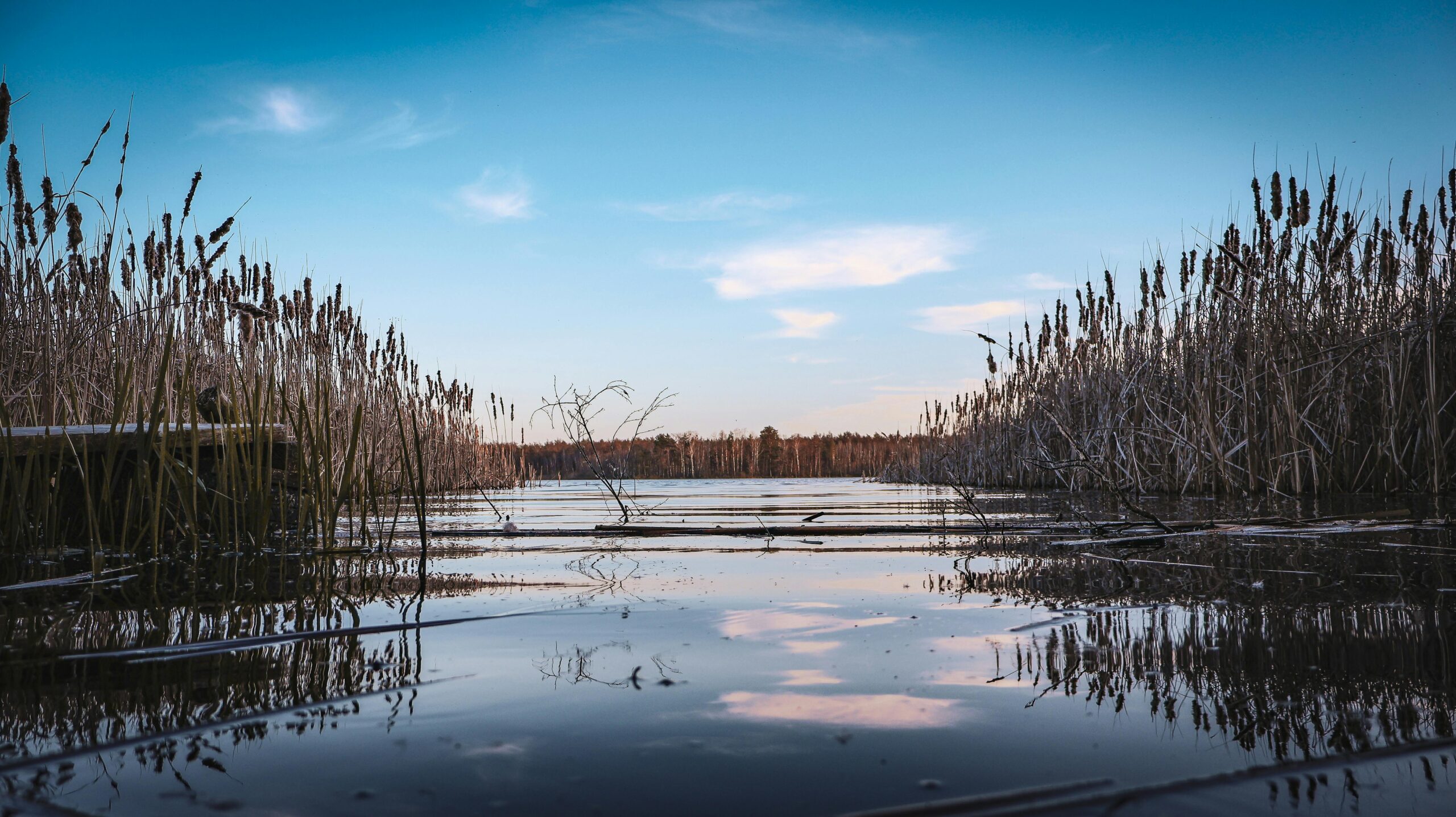
Reed beds that rustle like paper, flooded inlets rich with insects, shallow beaches where waders sift through sand and silt, and deeper stretches where cormorants dive with an elegance that seems almost deliberate. Each of these micro-environments shelters its own population of resident and migratory species.
At sunrise, the canebrakes are the first to wake. Moorhens slip between the stems, their steps barely audible, while little grebes send delicate ripples across the surface. In the brighter hours, the lake becomes a stage for movement: yellow-legged gulls turning in wide spirals, ducks grooming in the sheltered coves, and the sharp silhouettes of raptors patrolling the thermals above the morainic hills.
Birds as an Ecological Barometer
Observing the lake’s birdlife is not only a matter of beauty — it is a way of understanding the health of the ecosystem.
The presence or absence of certain species reflects the quality of the water, the condition of the reed beds, the impact of tourism and the fluctuations of climate. Birds react quickly: they shift, adapt, and move elsewhere if the balance is disturbed.
This is why seeing a heron or a cormorant going about its life is never trivial.
It means that the shoreline still shelters enough space, silence and food for their survival. Every flight becomes a quiet indicator of how the lake is doing.
A Landscape Best Seen Slowly
One of the simplest ways to experience this hidden world is to walk — truly walk — along the quieter stretches of the shoreline.
Just a few steps away from the busy promenades, the lake changes tempo. You begin to hear things you normally miss: the tapping of a water rail inside the reeds, the rush of wings close to the surface, the low call of grebes communicating across distance.
There is a kind of peace in these encounters.
A reminder that Lake Garda is not only a destination, but an ecosystem with ancient rhythms still intact beneath the surface of everyday life.
ICONIC SPECIES
Herons: The Silent Guardians of the Reeds
The herons of Lake Garda are often the first birds that reveal themselves to patient observers.
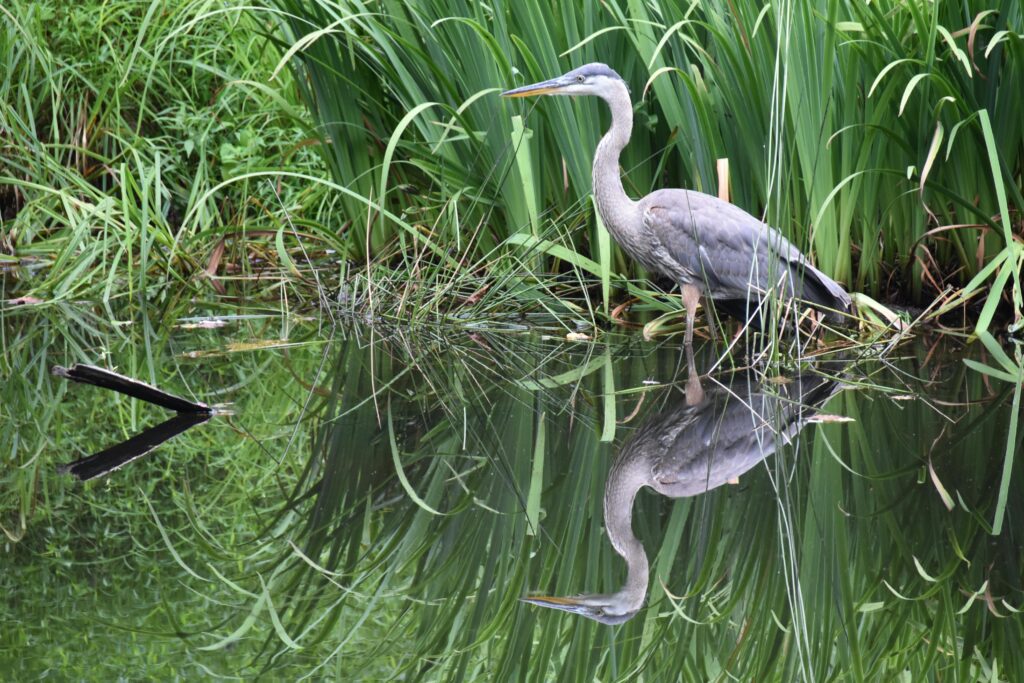
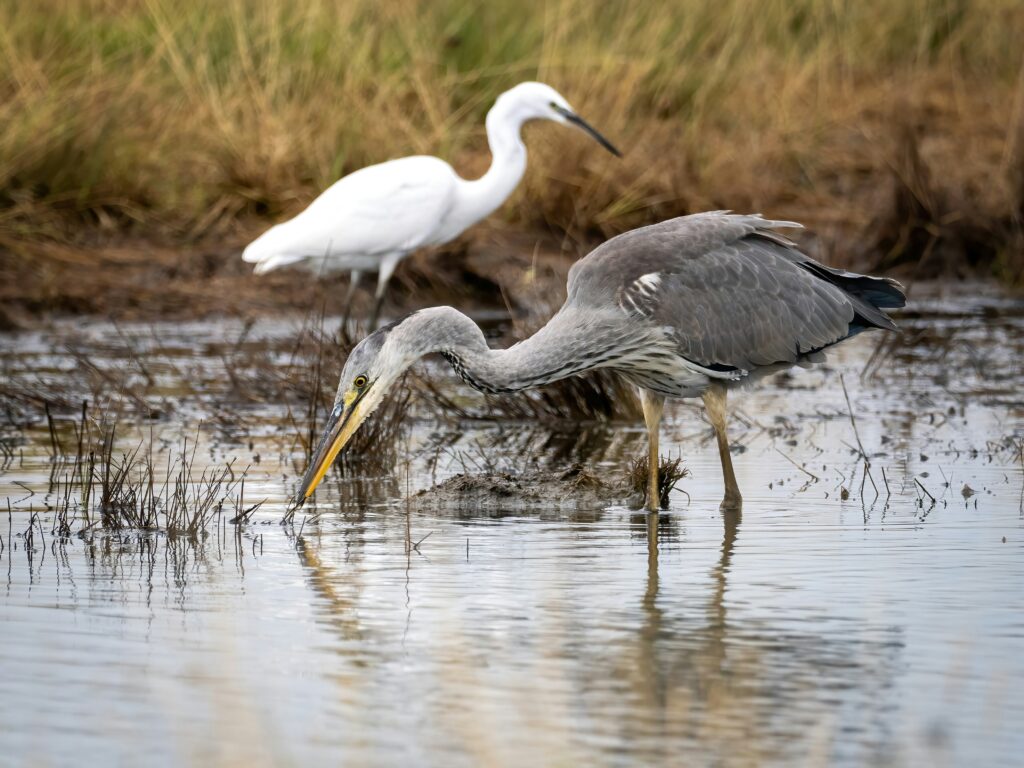
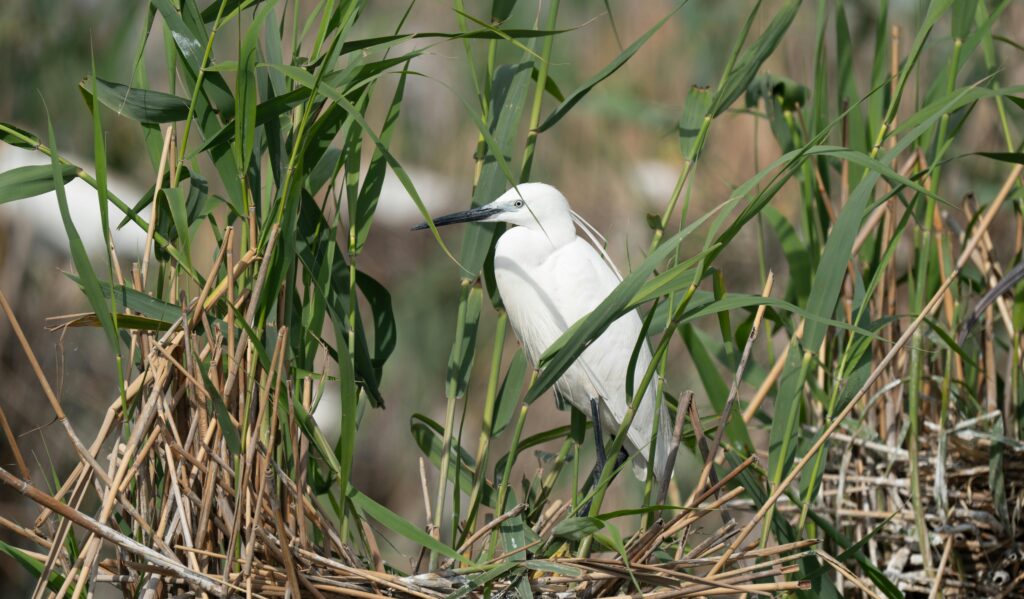
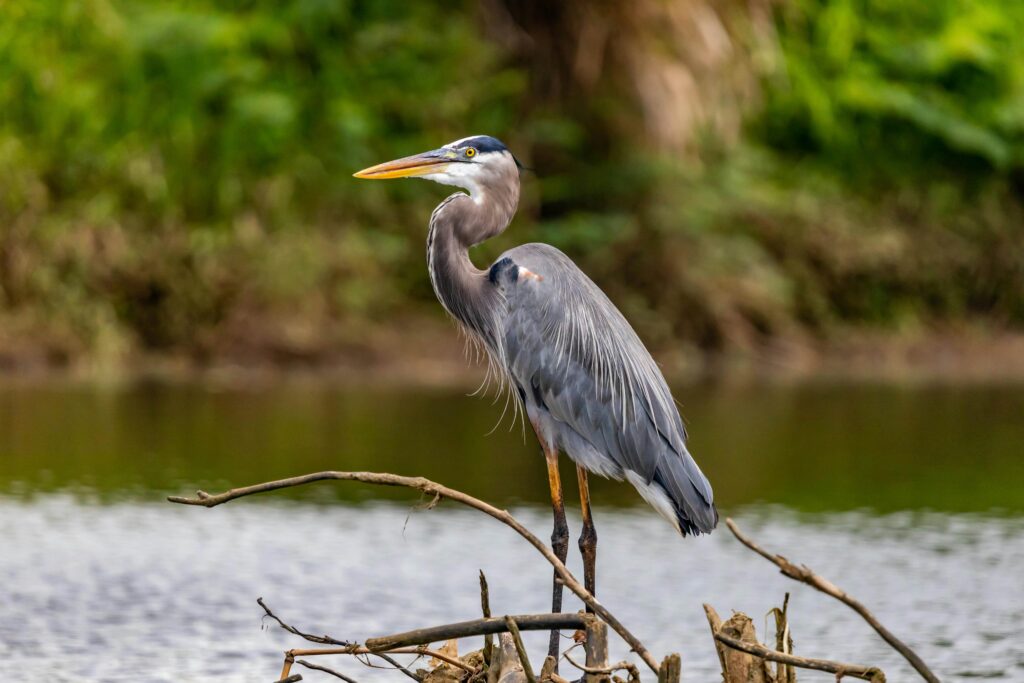
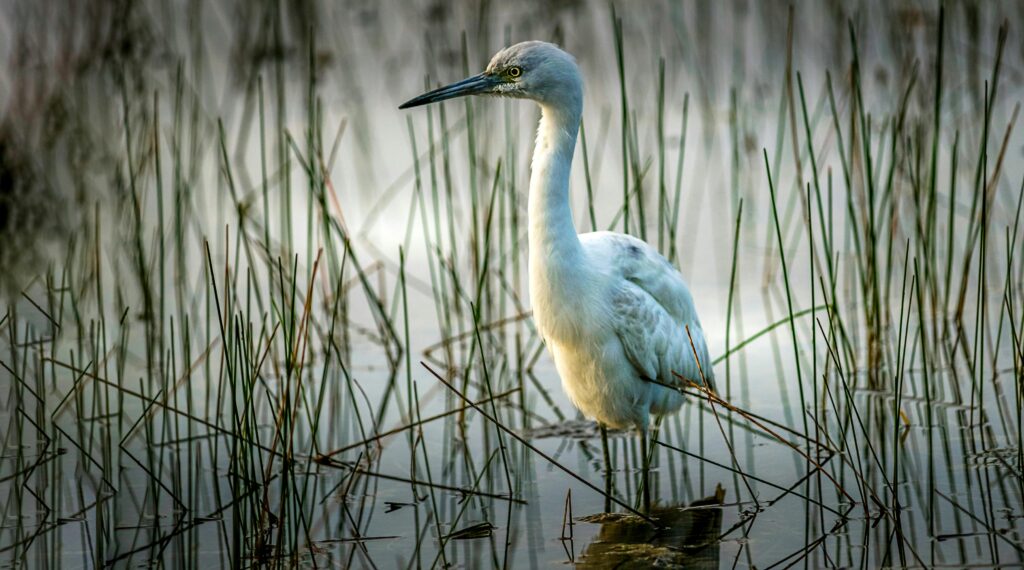
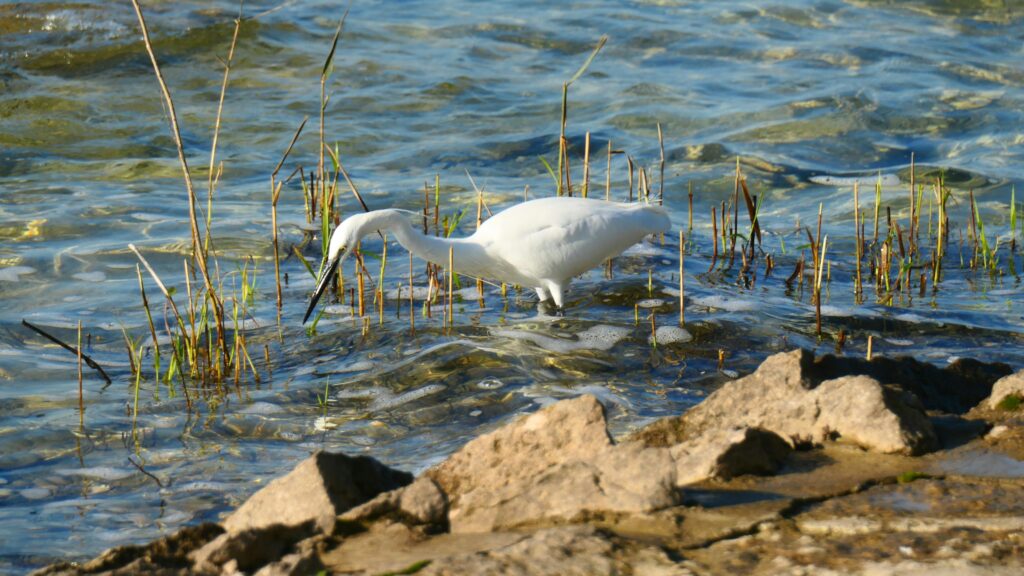
They stand in absolute stillness, as if carved out of the landscape, blending into the reeds with a precision that feels almost intentional. Grey herons dominate the shoreline with their long silhouettes, while little egrets, bright and delicate, move with lighter steps in the shallows.
Watching a heron hunt is witnessing a ritual of patience.
A single movement, a barely visible shift of weight, and then a sharp, decisive strike. The scene lasts a second, yet it holds an entire language: survival shaped by slow water, silence, and ancient instinct.
These birds are more than a familiar presence. They are a measure of the lake’s balance. Where herons return, the ecosystem still offers quiet corners, fish-rich shallows and enough distance from disturbance to allow life to flourish.
Cormorants and the Rhythm of Deep Water
While herons belong to the shore, cormorants belong to the depths.
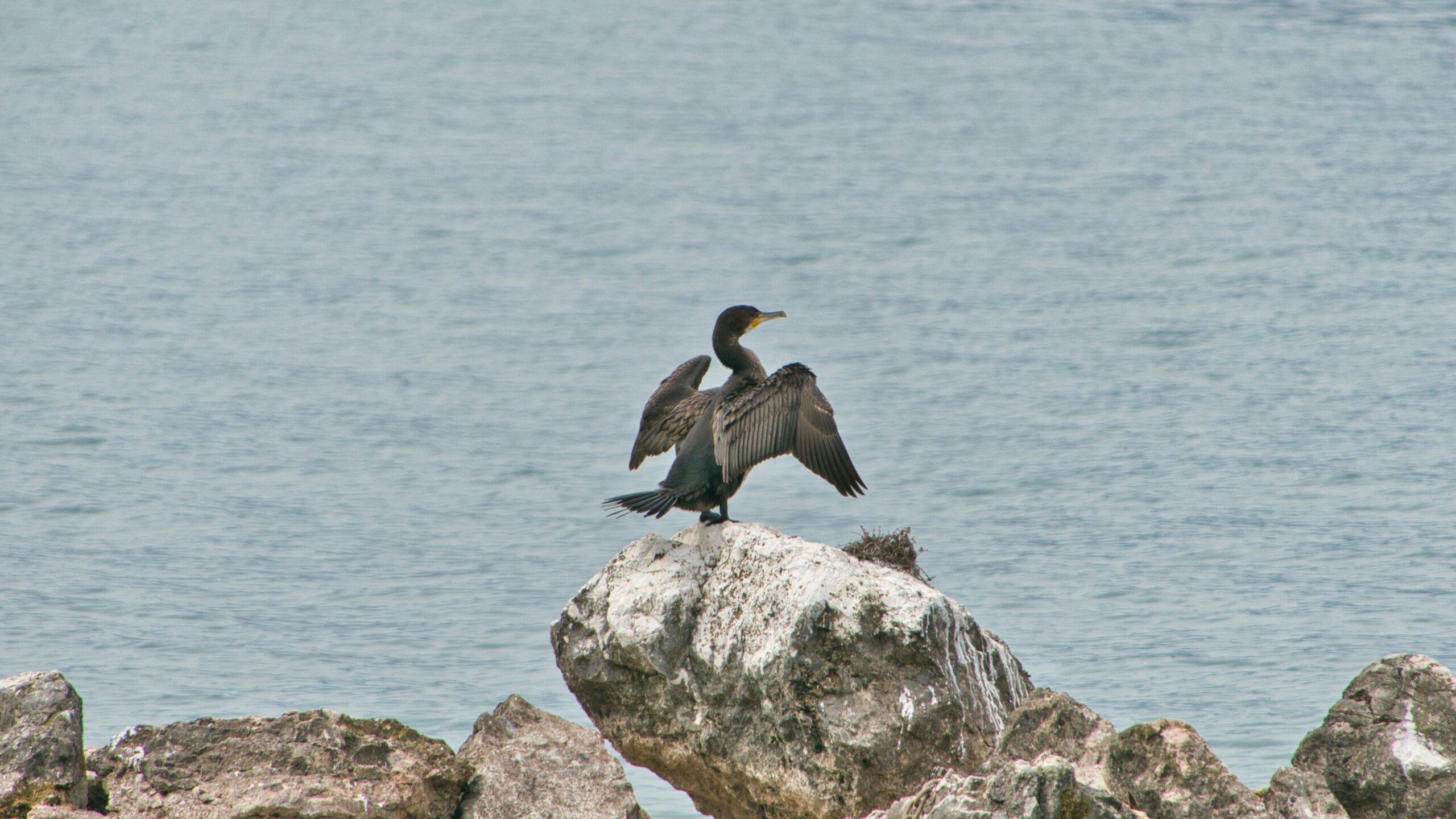
At dawn, they move across the lake like dark arrows, their silhouettes cutting cleanly through the pale surface. Later in the day, you might find them perched on old piers or rocks, wings spread wide to dry — a posture that looks almost ceremonial.
Cormorants dive with a precision that seems engineered.
They disappear beneath the surface, re-emerging metres away with movements as fluid as the water itself. Their presence is increasing on Garda, and with it, conversations about balance, fish stocks and the natural dynamics of a large lake.
But beyond debates, the cormorant remains a creature of astonishing adaptability.
A reminder that Garda is not a static postcard, but a living system that evolves, shifts and negotiates space among species.
The Seasons Written in Wings
The lake’s birdlife changes with the seasons, and each period has its own atmosphere.
Spring is a time of arrival: new songs, sudden colours, rapid flights. Autumn moves in longer lines — migrations that pass overhead with a quiet urgency. Winter reveals a different charm: grebes floating in cold light, coots gathering in tight groups, the outlines of ducks softened by mist.
Summer may seem quieter, but it offers its own signs.
Swifts carve patterns in the sky over the villages. Night herons emerge from hidden roosts. The reed beds glow gold at sunset, filled with small movements that are easy to miss unless you pause and let the scene unfold on its own.
Across all seasons, Garda remains a crossroads.
A place where birds stay, leave, return — and teach us, simply by being there, that nature’s rhythms are larger than our own.
Why These Birds Matter
The presence of birds around Lake Garda is not just an aesthetic gift; it is a reflection of something deeper.
Birds respond quickly to environmental change. They vanish when noise grows, when water quality drops, when reed beds disappear. And they return — sometimes unexpectedly — when conditions improve.
Their resilience is a quiet form of optimism.
It shows that even in a landscape shaped by tourism, movement and human rhythms, the essential harmony of nature can remain, if protected with care.
Watching them is more than observation.
It is a way of listening to the lake itself.
The Most Common Birds of Lake Garda
Lake Garda is not only about beaches and landscapes: it is also home, or a stopover, for many bird species. Some have become true symbols of the lake and can be seen every day along the shores, while others are more elusive and require a keen eye to spot. Here are the main feathered protagonists you can observe while walking by the lakefront or taking a boat.
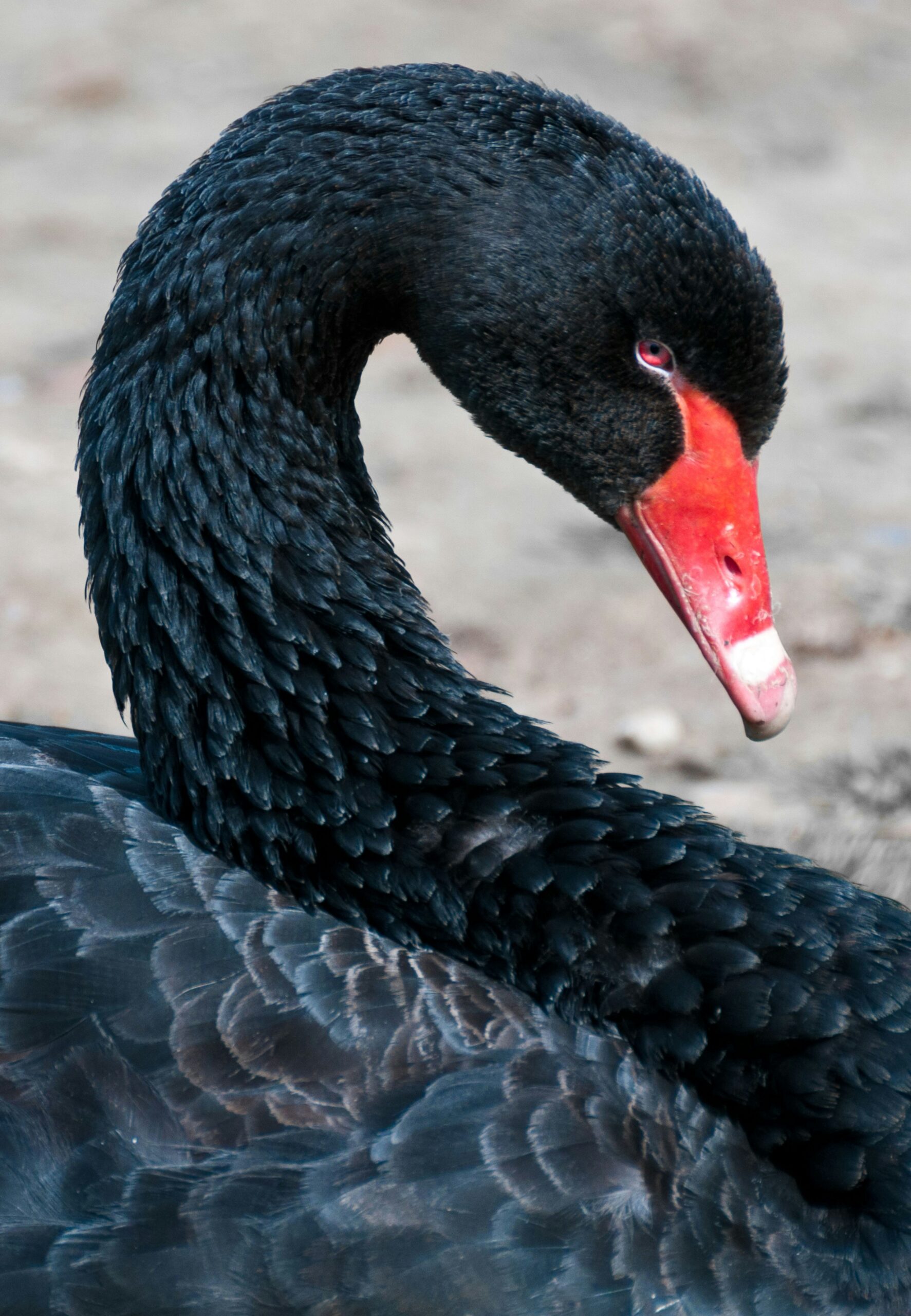
🦢 Mute Swan (Cygnus olor)
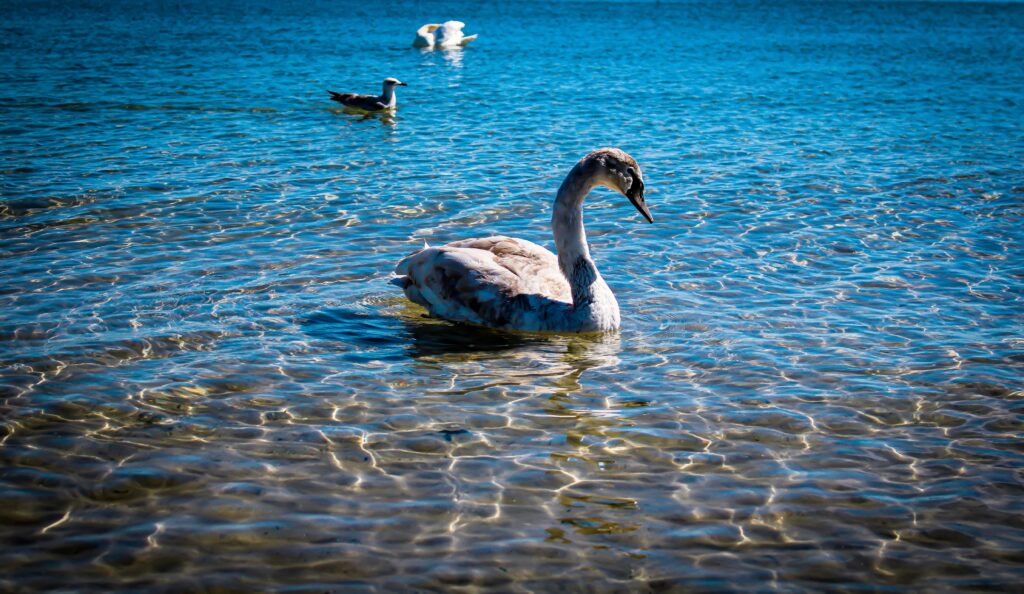
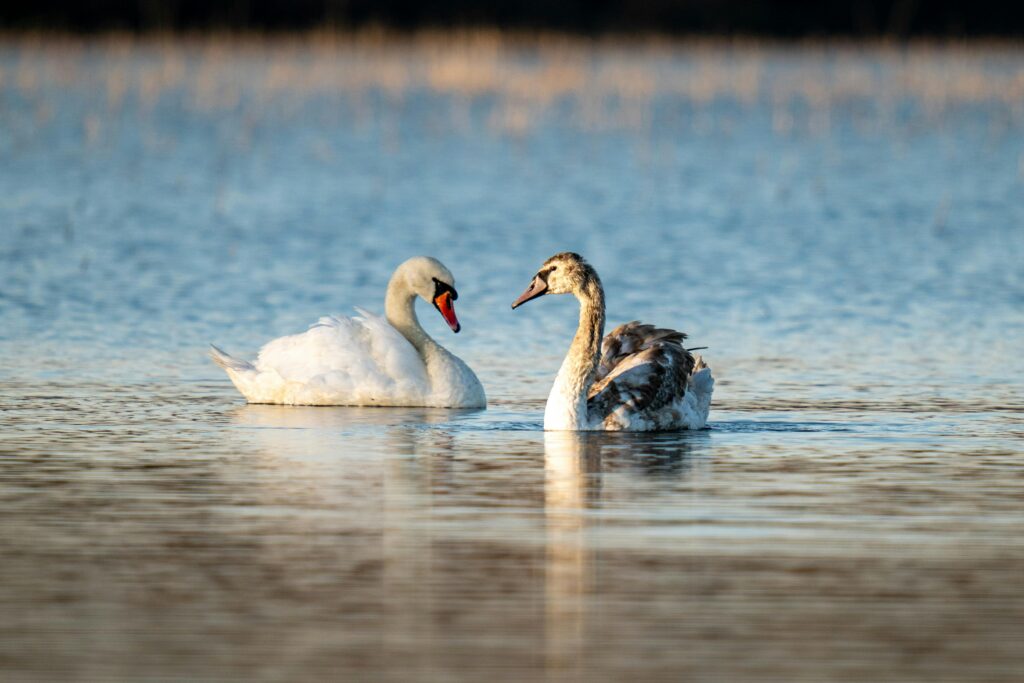
Perhaps the most beloved and photographed bird of Lake Garda. The mute swan has been present for decades, not originally native to the lake but now well established, favored by the mild climate and by tourists who often (though they shouldn’t) feed it.
It can be found in all the ports and urban areas of Desenzano, Sirmione, Garda and Riva, where it shows no fear of humans and allows people to get close. In spring, however, it becomes very territorial and fiercely defends its nest: better to watch from a distance.
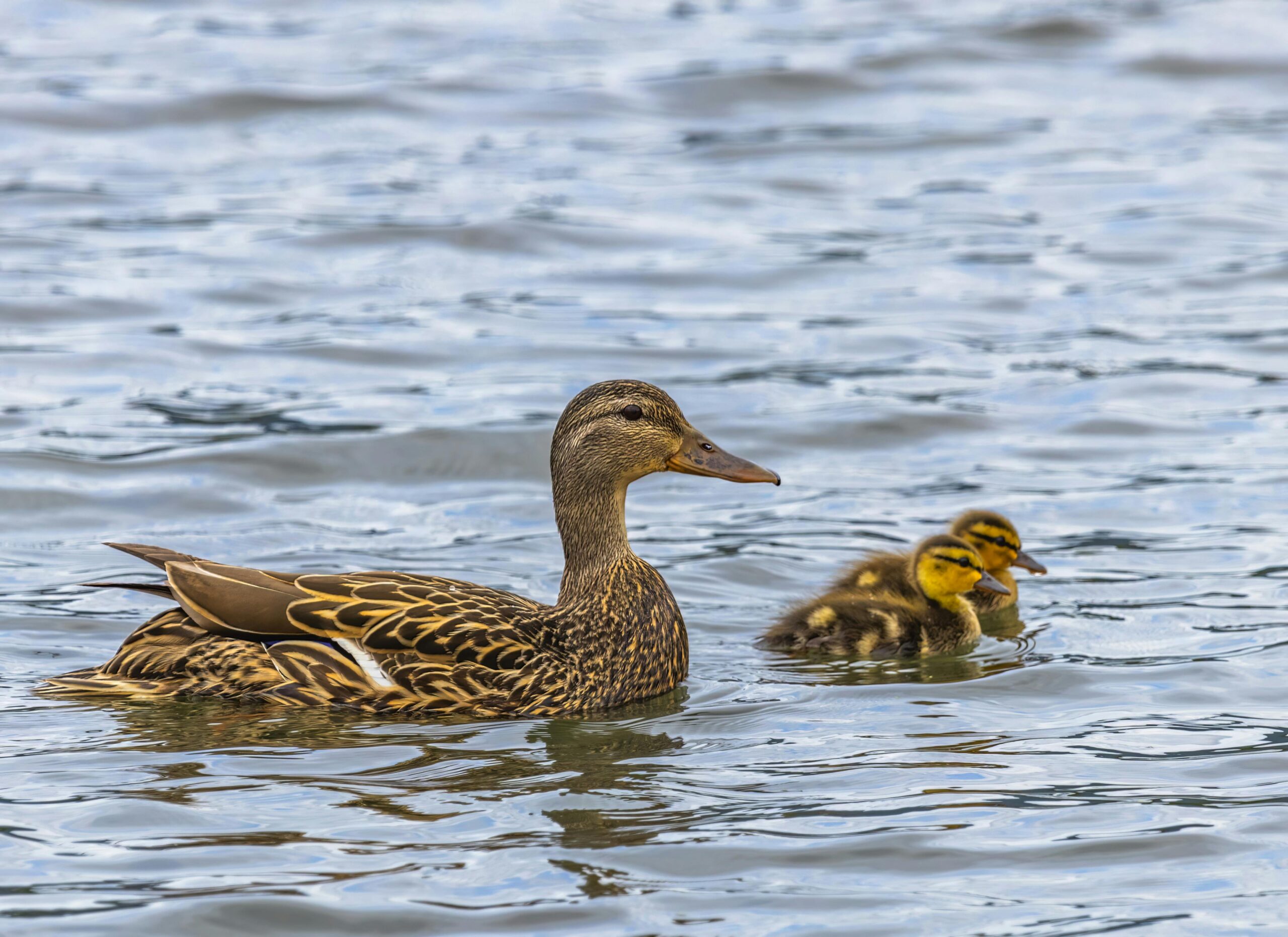
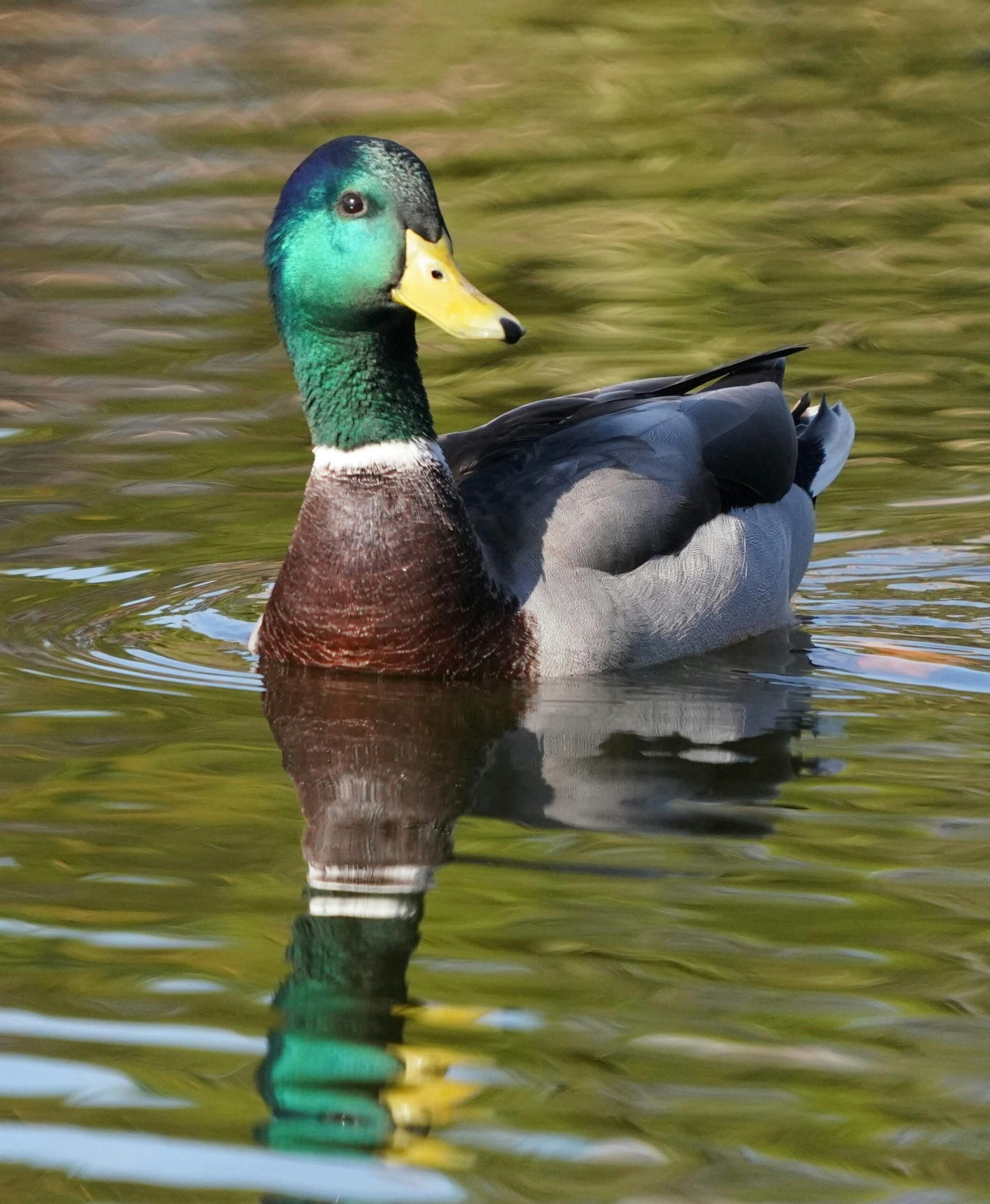
🦆 Mallard (Anas platyrhynchos)
The most widespread duck in Europe, and the undisputed queen of Lake Garda. Males are easy to recognize with their shiny green heads, while females are brown and well camouflaged. They are present year-round, often in large groups crowding docks, beaches, and reed beds.
Mallards are now resident on the lake: they no longer migrate as much thanks to mild winters and abundant food. Friendly and curious, they often approach people without hesitation.
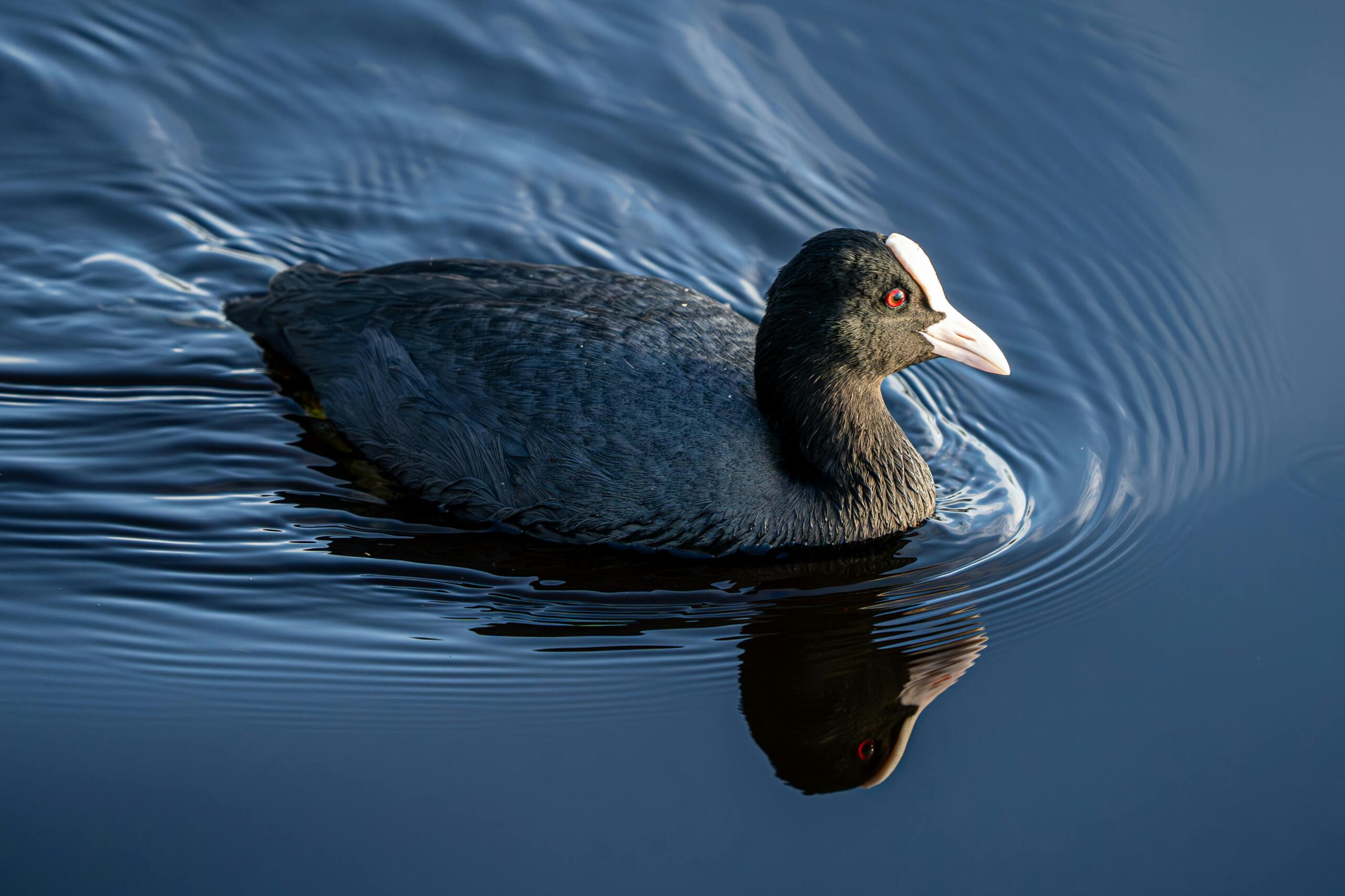
⚫ Eurasian Coot (Fulica atra)
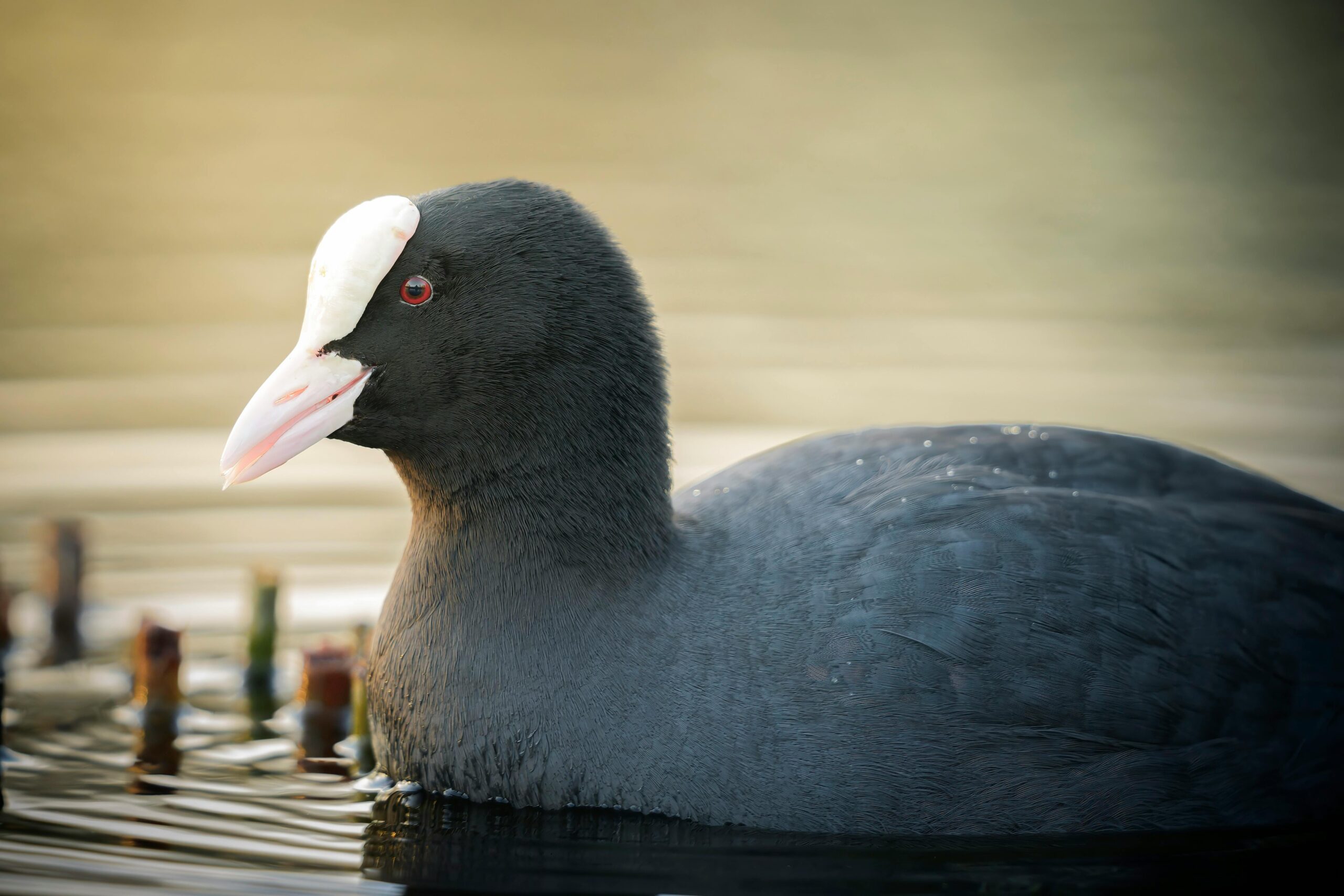
Entirely black with a distinctive white beak, the coot is less showy but just as common. It lives in large flocks and is recognizable by its constant swimming and diving in search of aquatic plants.
It is present year-round, but numbers increase in winter when individuals from Northern Europe come to Lake Garda to overwinter. It prefers calm waters and reed beds, so it is often easier to see in quieter areas, away from crowds.
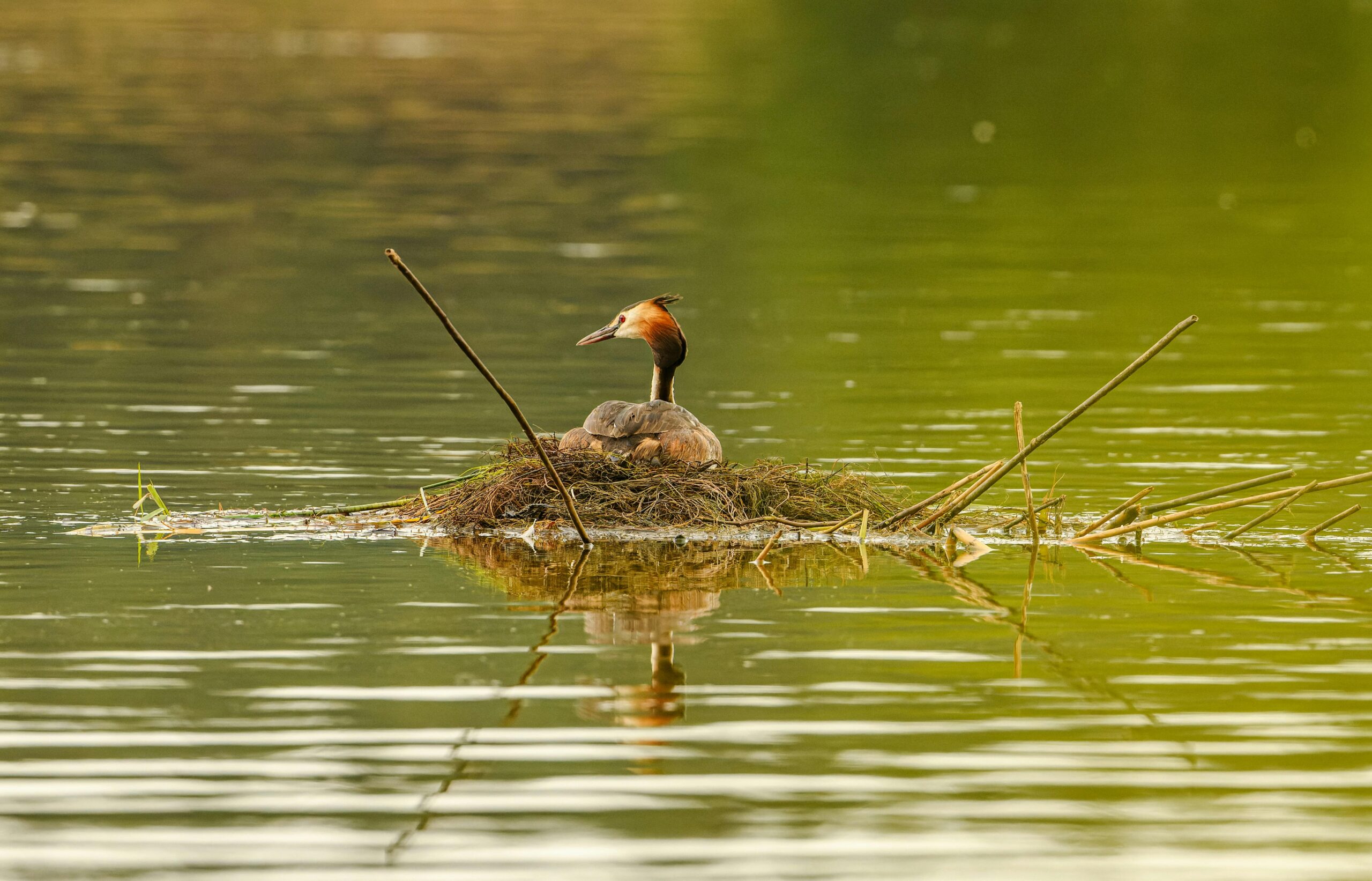
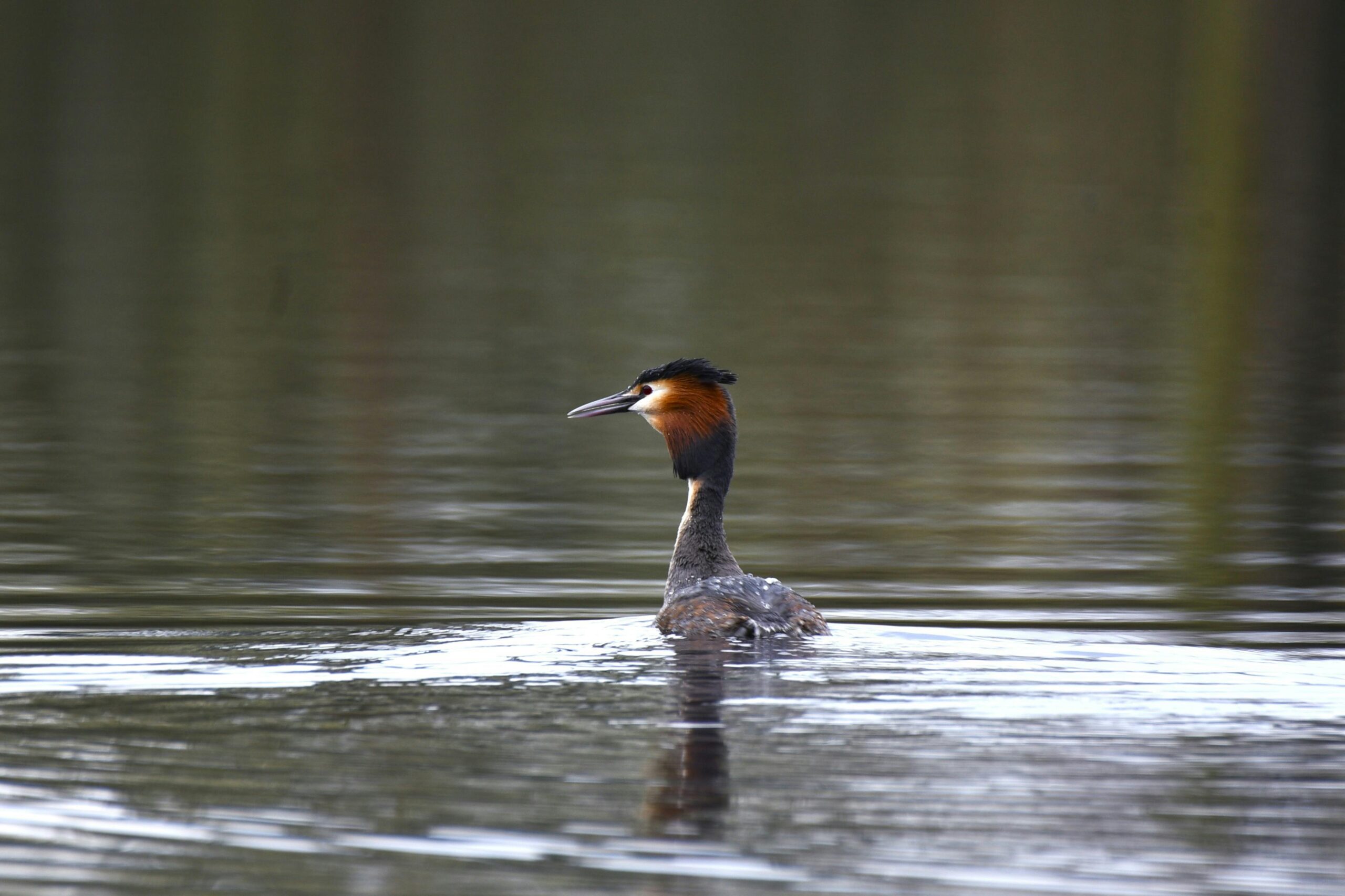
🐦 Great Crested Grebe (Podiceps cristatus)
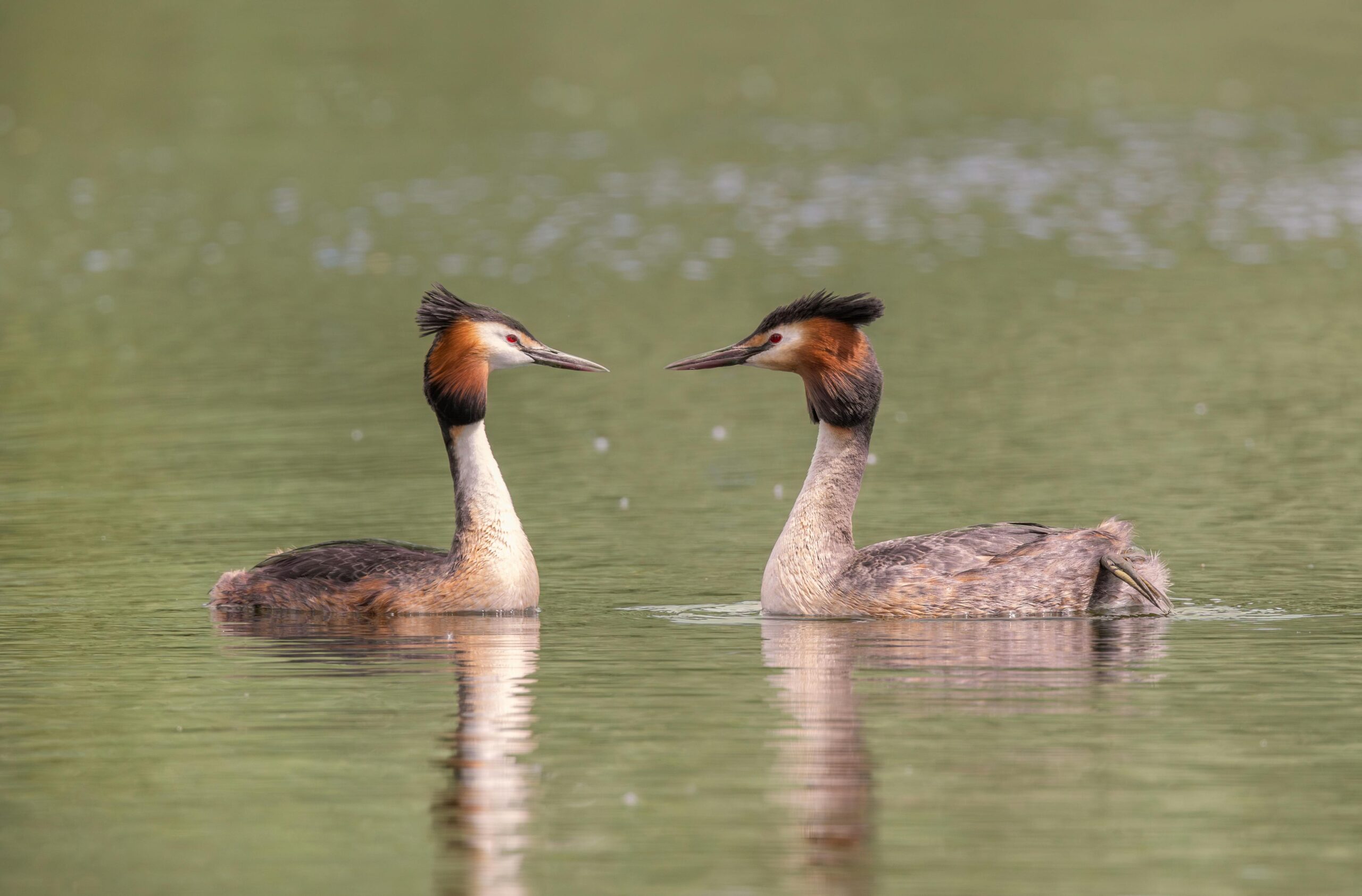
A true dancer of the lake. The grebe is famous for its spectacular courtship ritual, where two individuals mirror each other’s moves and exchange weeds as gifts. It is an expert diver, capable of catching fish underwater.
It is most often seen in open waters, away from busy ports, but can also be spotted close to shore during quieter hours. Present year-round, it nests among the reeds in spring and remains on the lake through winter.
🪶 Grey Heron (Ardea cinerea)
With its unmistakable silhouette and broad wings, the grey heron is always an impressive sight. Often seen standing motionless in marshes, along rivers flowing into the lake, or on quieter beaches, patiently waiting for prey.
In recent decades, it has spread widely: today it breeds in large colonies, called “heronries,” on tall trees near rivers. It is not unusual to see them flying over lake towns on their way to reed beds. They are present all year round.
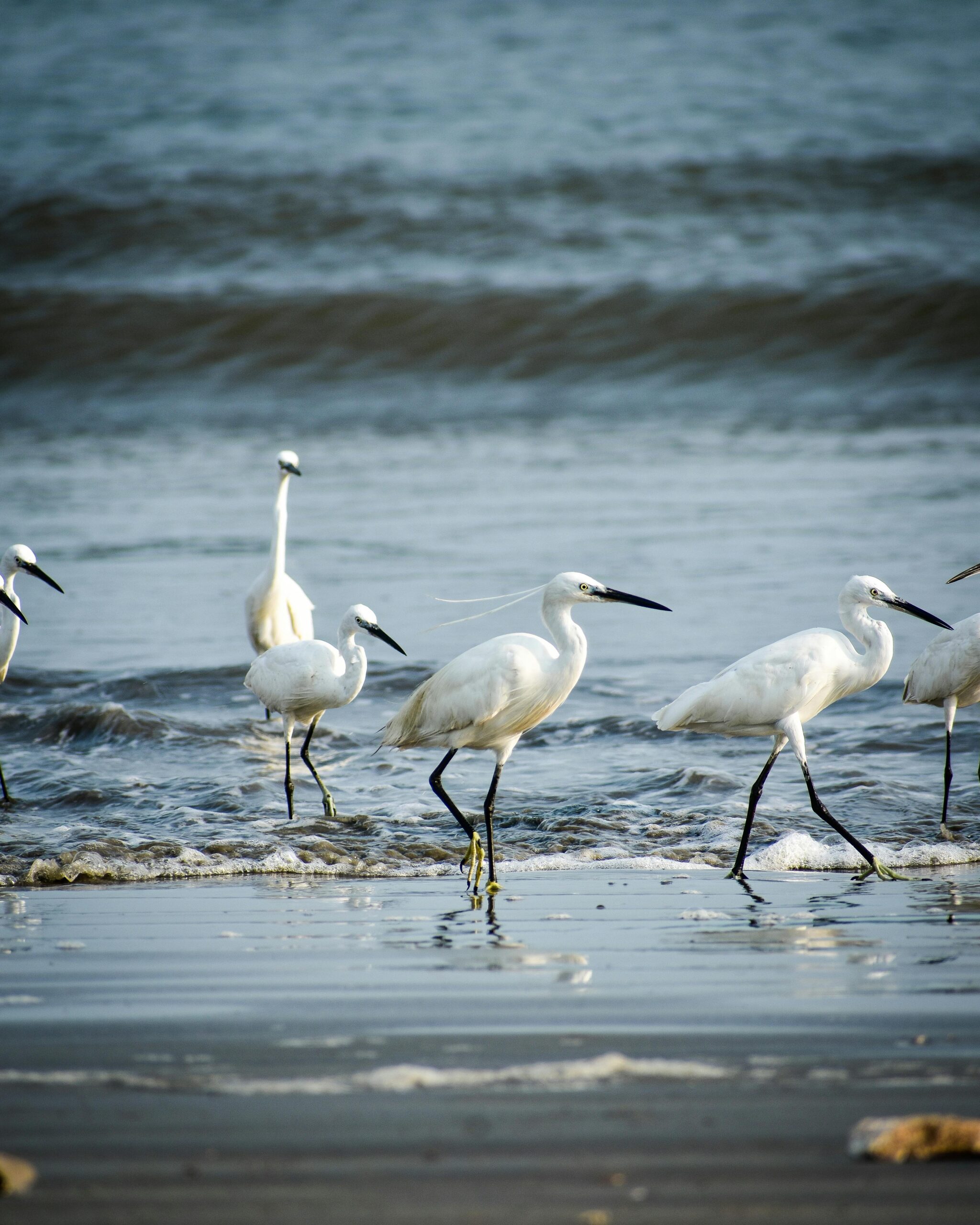
🤍 Little Egret (Egretta garzetta)
Smaller and more slender than the grey heron, the little egret is striking with its pure white plumage, black beak, and long black legs with yellow toes. Graceful and active, it often wades in shallow waters looking for fish, crayfish, and insects.
Until a few decades ago it was less common, but its numbers at Lake Garda have increased with improved environmental conditions and the expansion of Italian populations. Some individuals remain during winter, but most are migratory and return in spring.
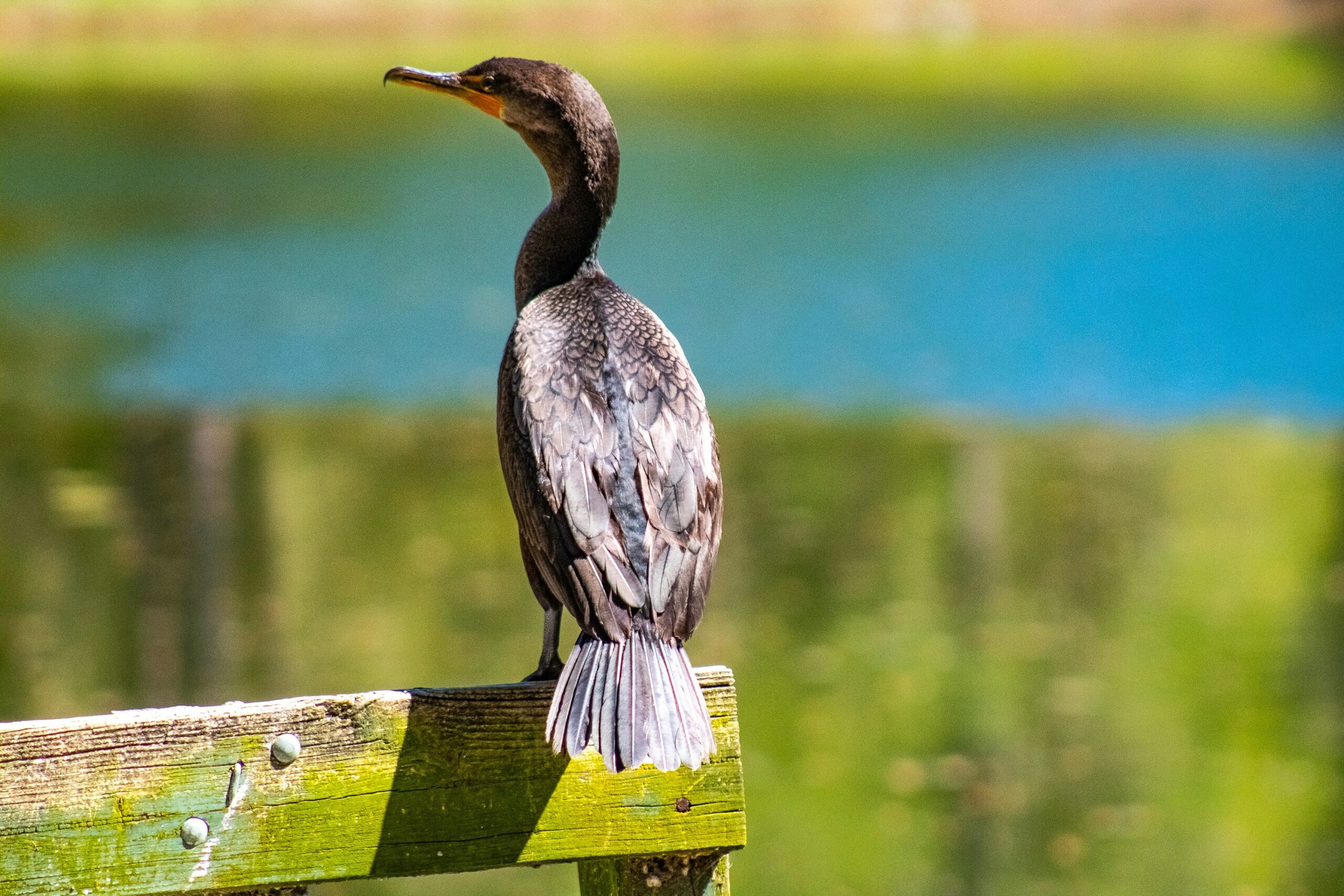
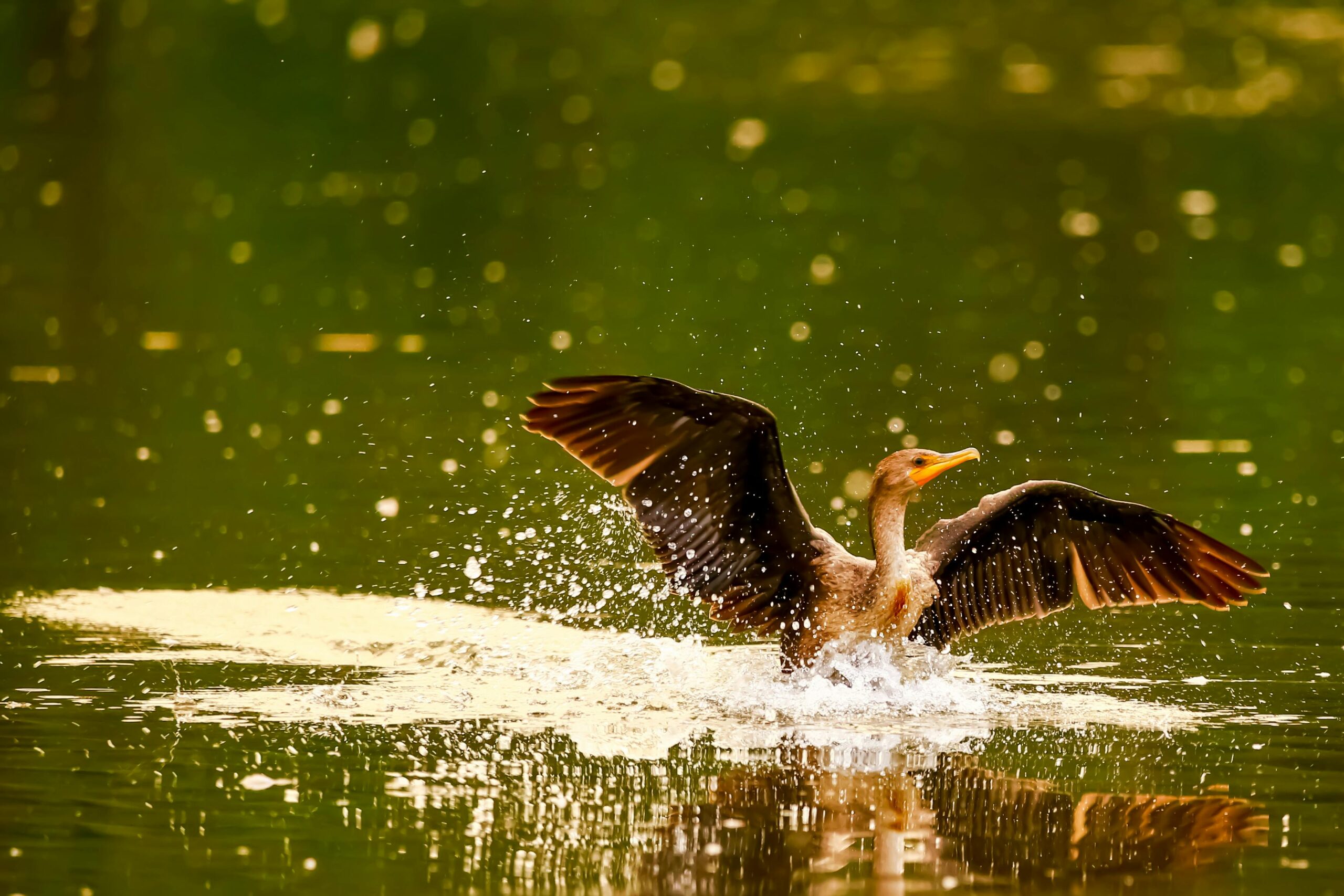
⚓ Great Cormorant (Phalacrocorax carbo)
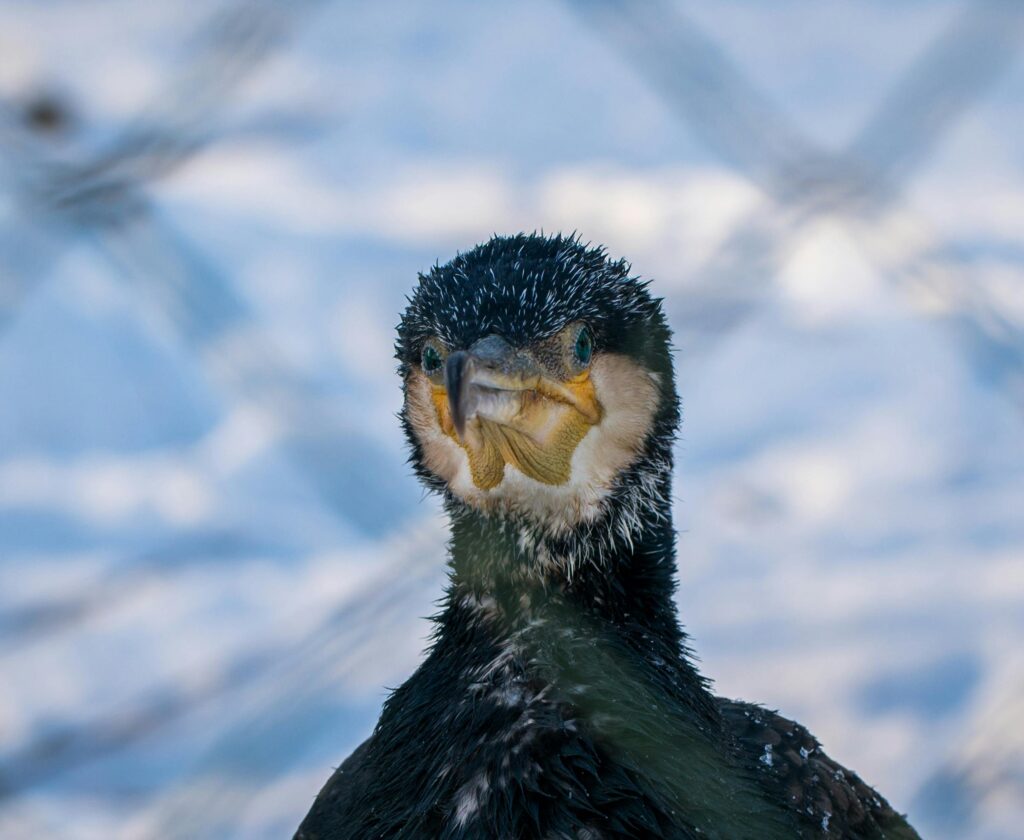
Once rare, today the cormorant has become a constant presence on the lake, especially in winter. Black, with a sinuous neck and hooked beak, it is an excellent fisherman: diving to catch fish, then spreading its wings in the sun to dry—a typical and unmistakable behavior.
In recent decades its population has grown considerably in Italy, and Lake Garda is one of the areas where they gather in large numbers, especially around harbors and rocks. Some stay year-round, but most arrive in autumn from Northern Europe to overwinter.
Unlike swans and mallards, cormorants are less tame: they usually keep their distance from people, but are not difficult to spot on posts, rocks, or calm waters early in the morning.
Conclusion
With its mild climate and variety of habitats—from open waters to reed beds, from urban beaches to river mouths—Lake Garda is a haven for many bird species. Some, like swans and mallards, live in close contact with people. Others, like grebes and coots, reveal the lake’s quieter aquatic life. And then there are the impressive herons, the elegant little egrets, and the dark cormorants, which add a wilder touch to the landscape.
Watching them is a way to discover Lake Garda with different eyes, more attentive to the nature that thrives here.
Birdwatching Hotspots
The areas around Lake Garda where you can see the greatest number and variety of birds are mainly the quieter spots, rich in reeds, wetlands, and small natural harbors:
-
Lazise – Bardolino – Garda (Venetian shore): reed beds and small harbors host coots, mallards, grebes, and cormorants.
-
Punta San Vigilio and Baia delle Sirene: a very rich area for aquatic birdlife, especially early in the morning.
-
Sirmione (Punta Grò and the Lugana beach area): large concentrations of coots, mallards, swans, and grebes, with herons and egrets in the quieter corners.
-
Desenzano – Rivoltella – San Martino della Battaglia: piers and small free beaches attract gulls, cormorants, and ducks. Oasi San Francesco in Desenzano del Garda
-
Manerba del Garda and Rocca di Manerba: strategic points for spotting birds of prey (falcons, buzzards) and migratory species
- Isola del Garda and Isola dei Conigli (Brescian shore): perfect habitats for mixed colonies of waterbirds and migratory birds.
The best seasons for variety are during migration (March–May and September–October), when many species use Lake Garda as a stopover.
🛠️ Birdwatching Tips around Lake Garda
-
Go at dawn or sunset — that’s when most waterbirds are active.
-
Bring a binocular or spotting scope, and wear neutral or natural-colored clothing.
-
Stay on the paths — don’t enter the reed beds; it disturbs the birds and can damage the habitat.
-
Check the official maps and signs for observation towers, viewpoints, or marked trails inside reserves.
-
Respect access rules and opening hours, especially in protected or private areas (like Frassino Lake or San Francesco wetlands).
-
Move quietly and avoid sudden movements — patience is key for good sightings.
-
Take a small notebook or app to record species and behaviors you observe.