Castellaro Lagusello — A Heart of Water and Stone
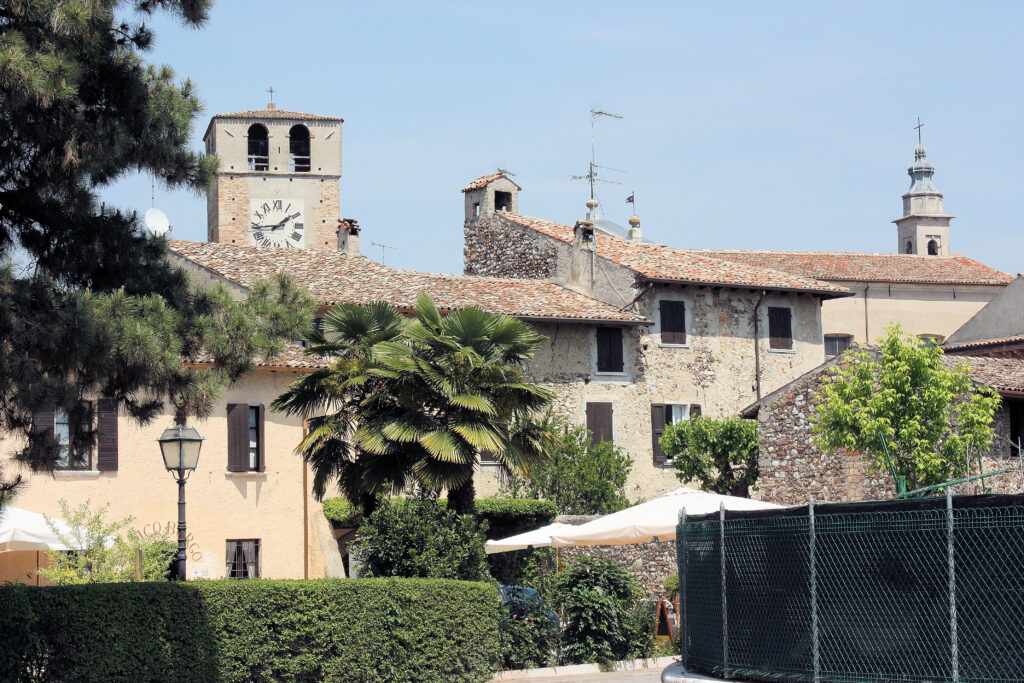
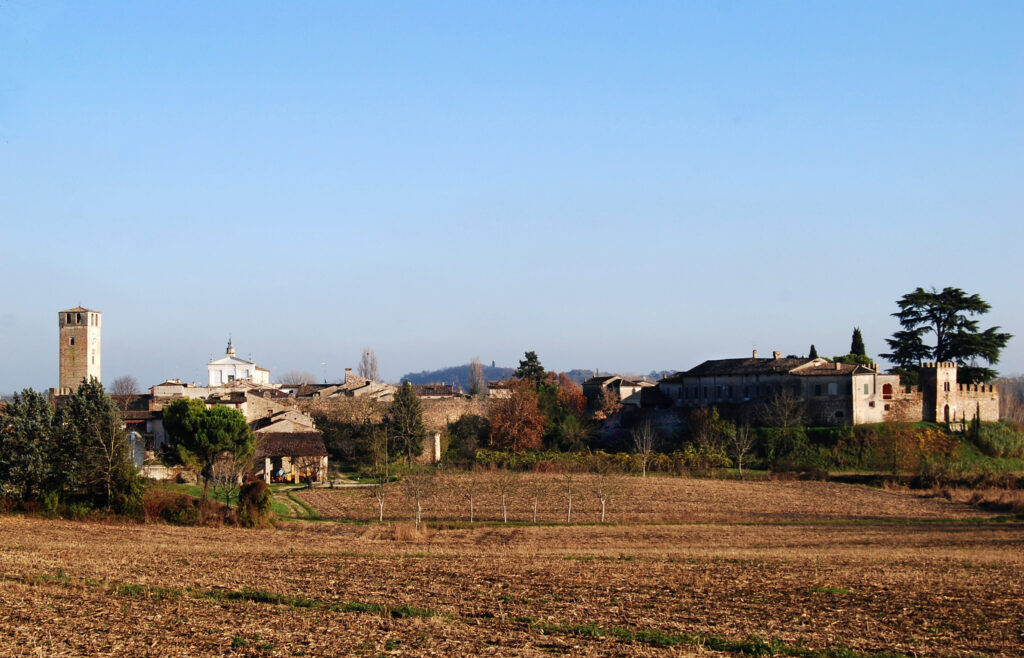
South-east of Lake Garda, nestled in the Morainic Hills, Castellaro Lagusello is a fortified medieval hamlet overlooking a small glacial lake — famous for its subtle heart shape. It’s officially listed among Italy’s “Borghi più Belli”.
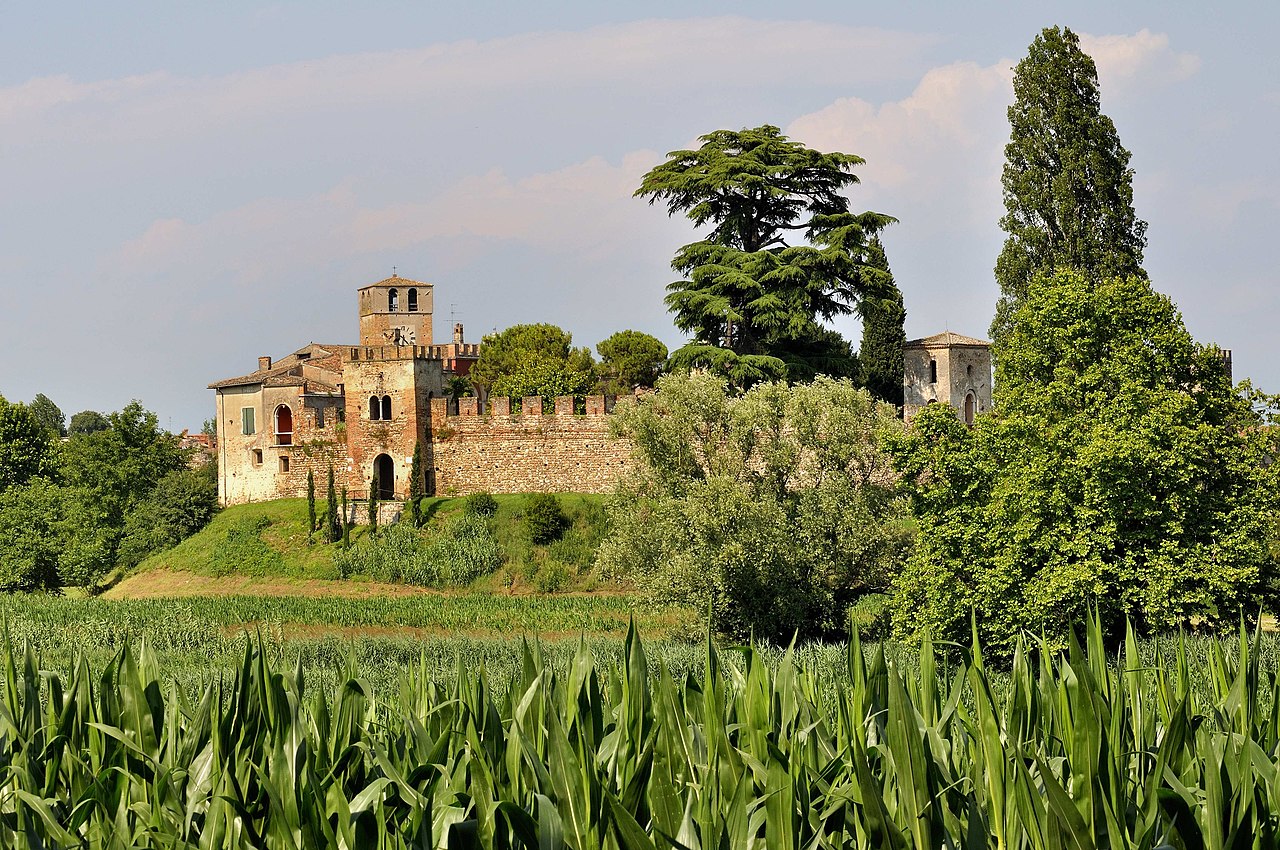
Loop Walk Around the Castellaro Lagusello Nature Reserve I - The Fields
Loop Walk Around the Castellaro Lagusello Nature Reserve II - Around the Lake
🕰️ History: Fortifications and Ancient Settlements
Castellaro Lagusello’s story begins long before medieval times. Archaeological excavations revealed prehistoric pile-dwellings, connecting this site to the broader Alpine lake-dwelling culture (UNESCO context). During the Bronze Age, humans settled around the lake’s marshy perimeter, using raised platforms above the wetlands.
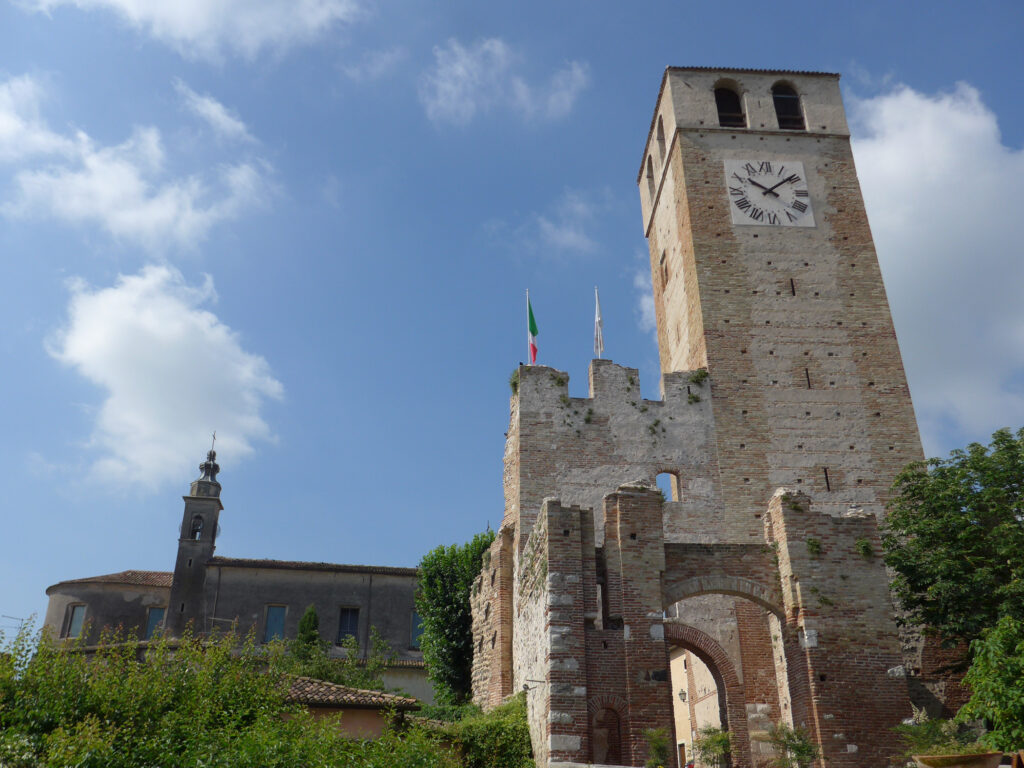
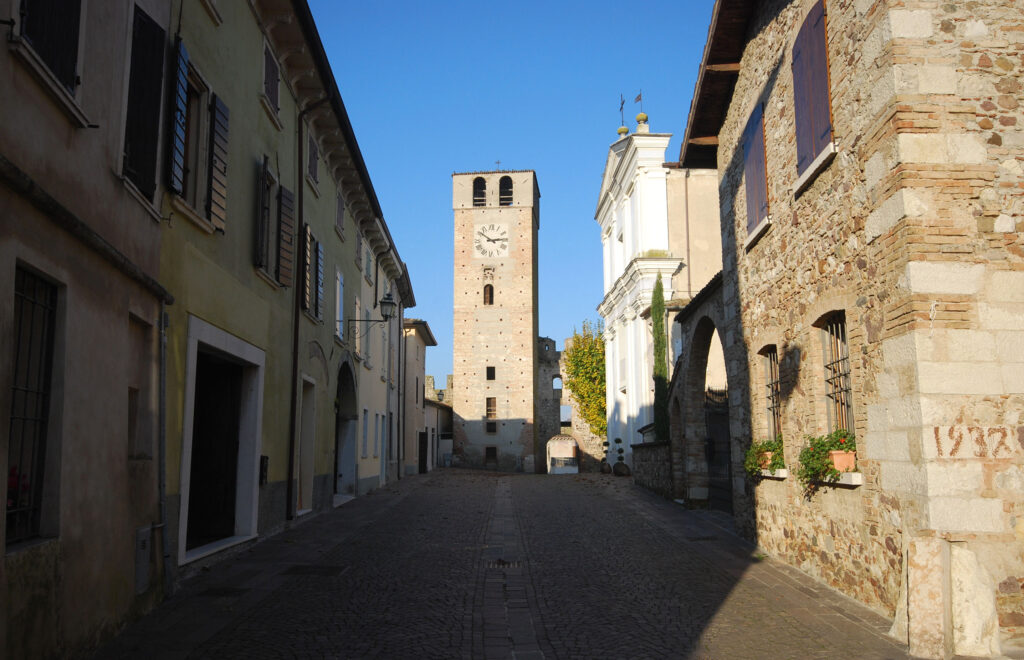
In the Middle Ages, the strategic position on a sequence of gentle hills made it ideal for surveillance and agrarian control. The village we see today took shape between the 13th and 14th century, under the influence of the Scaligeri and later the Gonzaga. The defensive walls, gatehouse, and tower remain the most visible heritage of this turbulent era.
Later, noble families converted the military complex into a residential villa with an Italian garden, adding aristocratic elegance to the rural surroundings.
🏛️ Monuments & Points of Interest
• Medieval Walls & Gatehouse
The stone and brick curtain walls protect the village like a micro-citadel. The main entry gate frames a postcard reveal.
• The Tower
Once a watchpoint over agricultural territories, today it offers an open view of vineyards, marshlands, and the glacial amphitheater around Garda.
• Villa Arrighi
Built onto the original fortress, this aristocratic residence includes a refined Italian garden and a formal courtyard. The contrast between medieval stone and orderly hedges is striking.
• Church of San Nicola
A small, intimate parish church with Baroque touches. Quiet, candle-scented, perfect for a pause.
• Ancient Granaries & Rural Houses
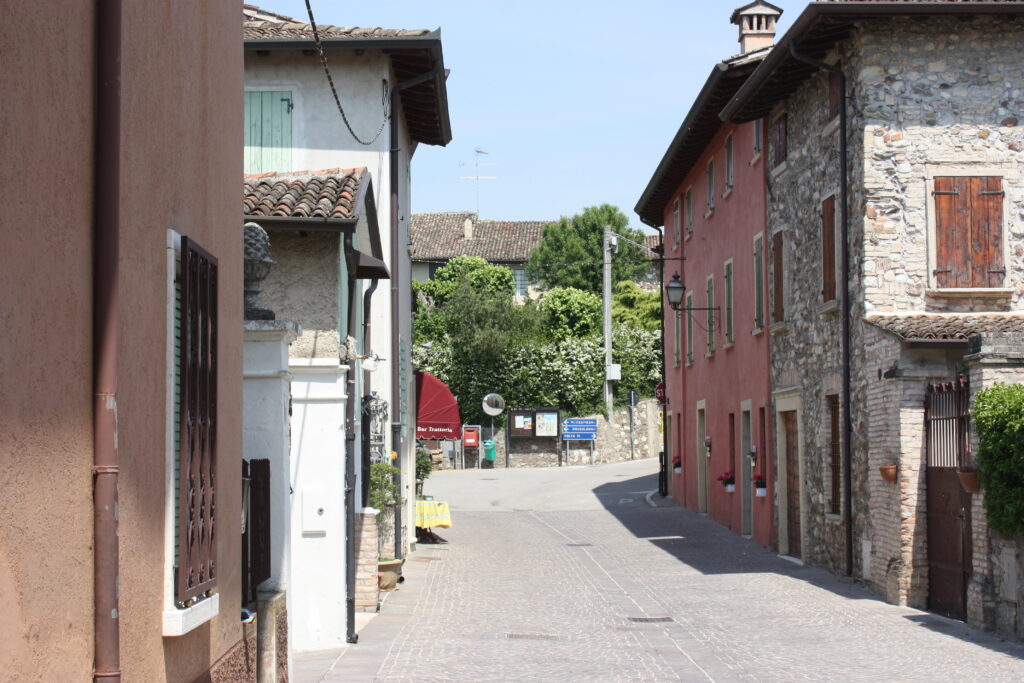
Look for narrow façades, wooden lintels, and stone doorframes — authentic rural architecture with centuries of continuity.
💧 The Heart-Shaped Lake: A Glacial Ghost
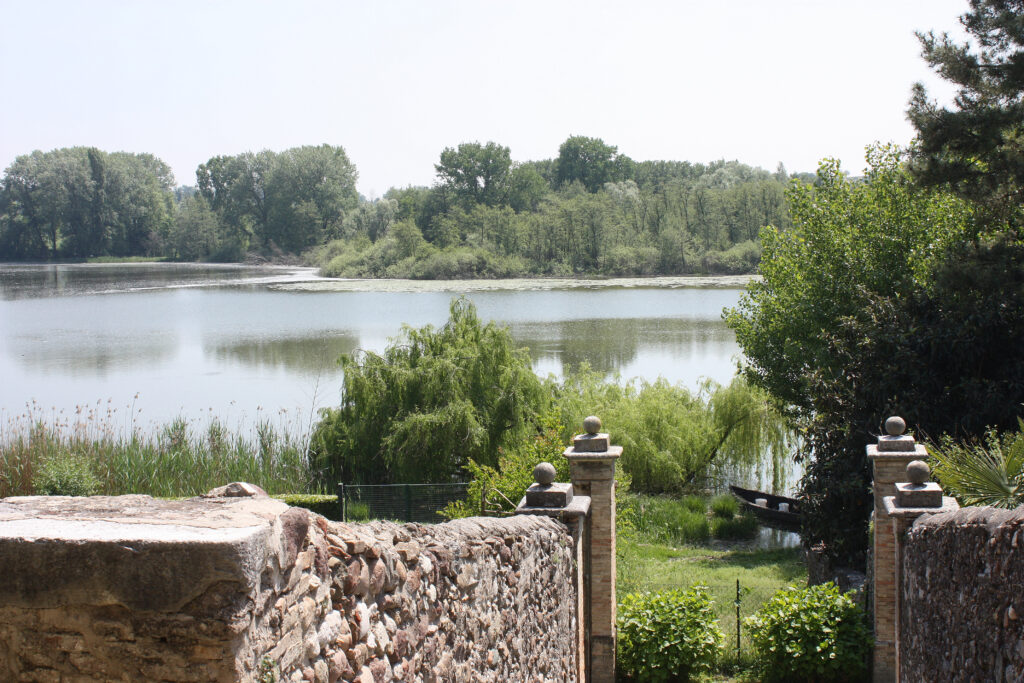
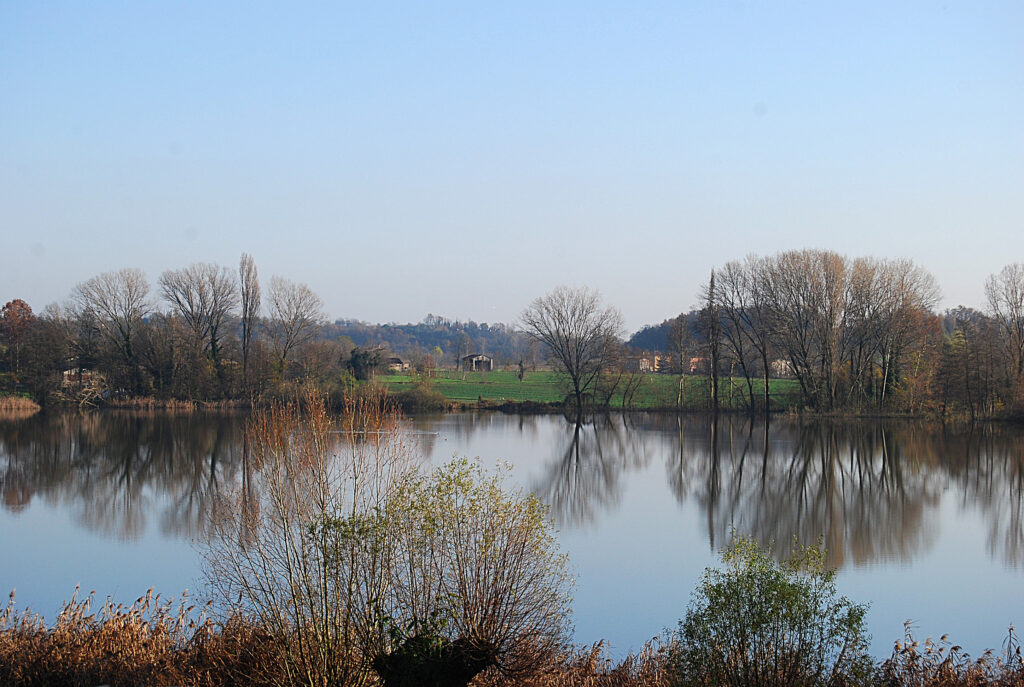
The lake is a kettle hole, created at the end of the last Ice Age when a block of glacial ice detached and melted slowly, forming a shallow basin. Its heart shape is accidental but uncanny.
The perimeter is ringed by:
reeds (Phragmites australis)
floating vegetation
wetland grasses
Water levels fluctuate seasonally, creating ephemeral micro-habitats.
🌿 Nature Reserve & Environmental Importance
Although compact, the Castellaro Lagusello Nature Reserve is ecologically delicate. It protects:
🦆 dabbling ducks
🦢 swans
🦋 dragonflies and damselflies
🐸 amphibians in the wet meadows
🦅 marsh harriers and herons (occasionally)
The reed bed acts as a natural filter, improving water quality by trapping sediments and absorbing nutrients. This is why the environment feels clean, quiet, and biodiverse.
Under the surface, cold groundwater upwelling maintains temperature stability — ideal for amphibians and invertebrates.
🧭 Can You Do a Loop Walk Around the Reserve? (Yes — Off-Map)
Official tourist maps do not clearly mark a ring trail, because:
some stretches are agricultural service roads
parts are unpaved but public
signage is minimal
conservation rules discourage mass circulation
However, a loop is absolutely possible and locals do it regularly:
Loop Overview
Distance: 4.5–6.5 km depending on the variant
Difficulty: easy
Surface: gravel, country lanes, field paths
Elevation: minimal
Dog-friendly: yes
How It Works
Exit the village gate.
Follow the unpaved country road that skirts the back of the reserve.
Proceed through vineyard rows and gentle hills.
Curve toward the southern perimeter where wetlands are visible.
Reconnect to the paved road leading back toward the village.
You’ll walk around the restricted core of the reserve, not directly on its banks — this protects nesting birds and amphibian corridors.
Because it’s not officially promoted, you get:
✅ silence
✅ zero crowds
✅ agricultural authenticity
Bring a phone map: OpenStreetMap shows more detail than Google.
🦢 Wildlife Moments
herons lifting from the reeds at dawn
dragonfly swarms in May–June
coots chattering near the vegetation
owls at dusk over the vineyards
In cold seasons, early morning mist creates a silver veil over the water.
🧬 Landscape Genetics: Morainic Hills
The rolling slopes around Castellaro are made of glacial deposits (moraines) pushed here by the ancient Garda glacier. This creates:
fertile soils for vineyards
undulating horizons perfect for cycling
microclimates ideal for Lugana grapes
You are literally walking on the ghost of an ice tongue.
🍇 Wine Culture
Expect:
Lugana whites (from nearby Pozzolengo zone)
light reds from local grape blends
small family wineries with honest, mineral profiles
In autumn, vineyards glow amber and gold.
🎭 Atmosphere
Inside the walls: cobblestones, bell echoes, swallows.
Outside: open fields, farm sounds, gentle breezes across reeds.
It’s the perfect frontier between medieval architecture and rural ecology.
🕐 Best Times to Visit
March–June (green explosion + dragonflies)
September–October (vineyard color, soft light)
Winter mornings (mist, silence)
Avoid peak weekends if you want intimacy.
🚴 Cycling Connections
Easy links to:
Borghetto sul Mincio (mills, river paths)
Valeggio (fortifications, tortellini!)
Pozzolengo (vineyards, rustic taverns)
The Mincio Cycle Path is just a few kilometers away.
📸 Photography Tips
sunrise from the tower
vineyard backlight at golden hour
reed silhouettes across the water
fog lifting in slow curls
🌍 Why It Fits Planet Garda
Because it represents the other Garda:
quiet, ecological, historic, rooted in agrarian landscapes.
This is where glacial history, rural life, and medieval architecture meet.
One Lake, All Life.