Rocca di Manerba: a thousand lives in a single promontory
If there is one place on Lake Garda that refuses to be understood at first glance, it is the Rocca di Manerba.
Climbing to the top is not enough — you have to feel it. You have to stand on those wind-carved edges, watch the lake open beneath you, and remember that this is not just a hill: it’s a living archive of geology, ecology, and human history. A place layered far deeper than memory can hold.
🌍 A promontory shaped by time
An ancient limestone ridge, much older than the lake, born from a tropical sea and later sculpted by ice.
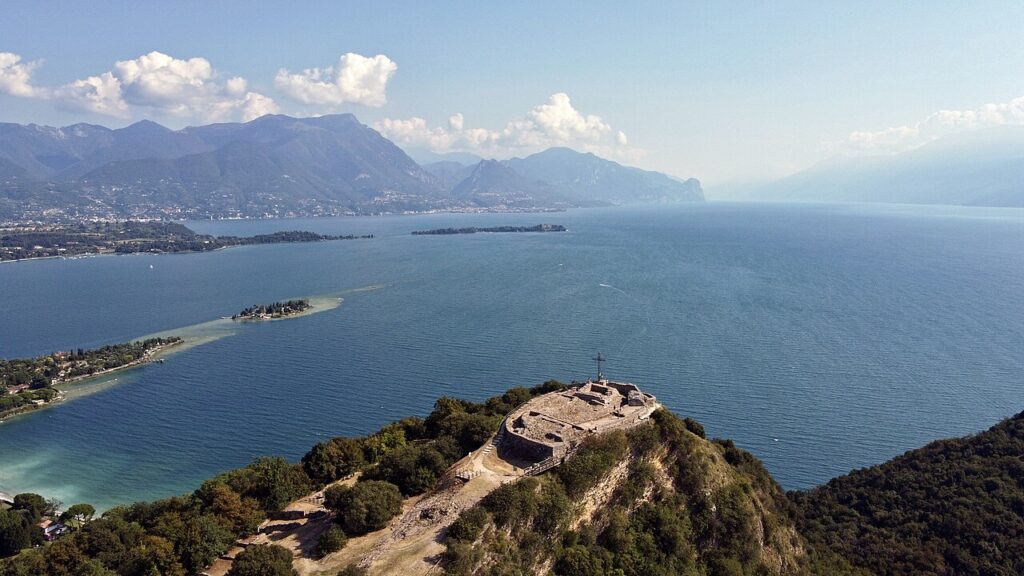
The Rocca was formed long before Lake Garda existed. The Valtenesi was once a warm, shallow sea filled with algae, shells and marine organisms now enclosed in its pale limestone. These rocks reveal that ancient world: sediments layered, collapsed, compacted and finally lifted, before the glaciers of the last Ice Age carved the valley and shaped the Garda basin. What remained at the margin of this newborn lake was a rocky outcrop, with the flat summit above and the Sasso plunging into the water like a fragment of Mediterranean coastline misplaced in Lombardy.
🛡️ A strategic stronghold through the centuries
A natural control point long before it became a viewpoint.
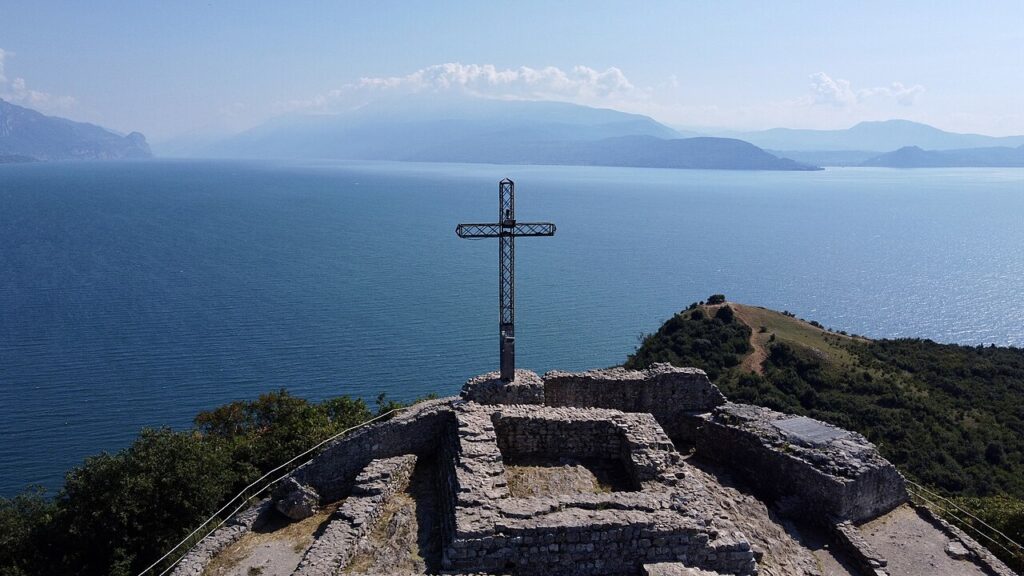
For centuries the Rocca served as a centre of surveillance and defence. The Romans used it as a natural lookout; in the Middle Ages it became a fortified site passing through different hands, and under the Venetian Republic it was watched as a key border. The remains of these eras are still visible in collapsed walls, reused stones and structures shaped by shifting power. Even the name “Manerba” may recall Minerva, protector of elevated and strategic places — an association that suits this promontory perfectly.
🌱 An ecosystem unlike anything else on the lake
A mosaic of microclimates where Mediterranean, pre-Alpine, steppe-like and lakeside environments coexist.
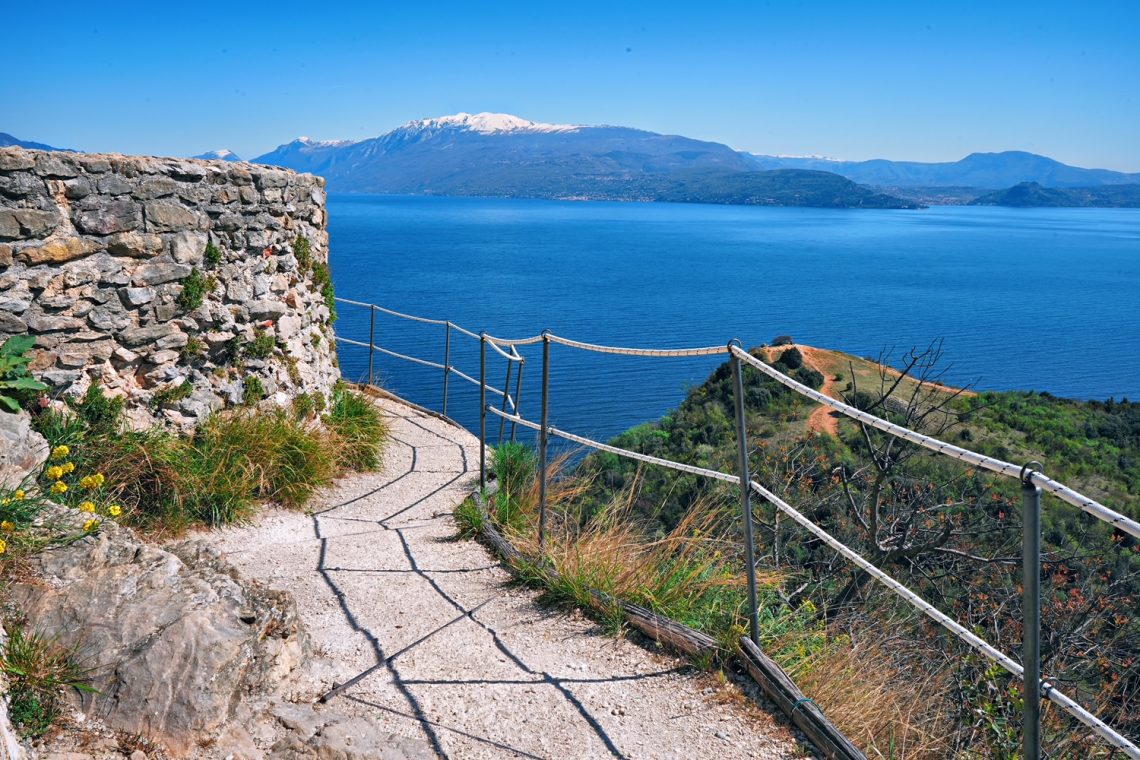
The ecological variety of the Rocca becomes obvious as soon as you walk its paths. Sun-exposed slopes feel Mediterranean; shaded hollows recall pre-Alpine woods; rocky ridges behave like patches of steppe; and the base of the cliff transitions into a lacustrine environment. Vegetation mirrors this complexity: rosemary grows beside red valerian, dwarf junipers anchor themselves to the limestone, wild orchids appear in spring, and butterflies and lizards move continuously across the warm rock surfaces.
Birdlife uses the cliff as a natural platform. Kestrels and falcons ride the rising currents, swifts slice through the air above the Sasso, and herons and cormorants lift from the lake following the vertical line of the cliff. It is a vibrant but fragile environment: a single step off trail is enough to crush dozens of micro-habitats.
🌄 A viewpoint that explains Lake Garda
A place where the whole structure of the landscape becomes instantly clear.
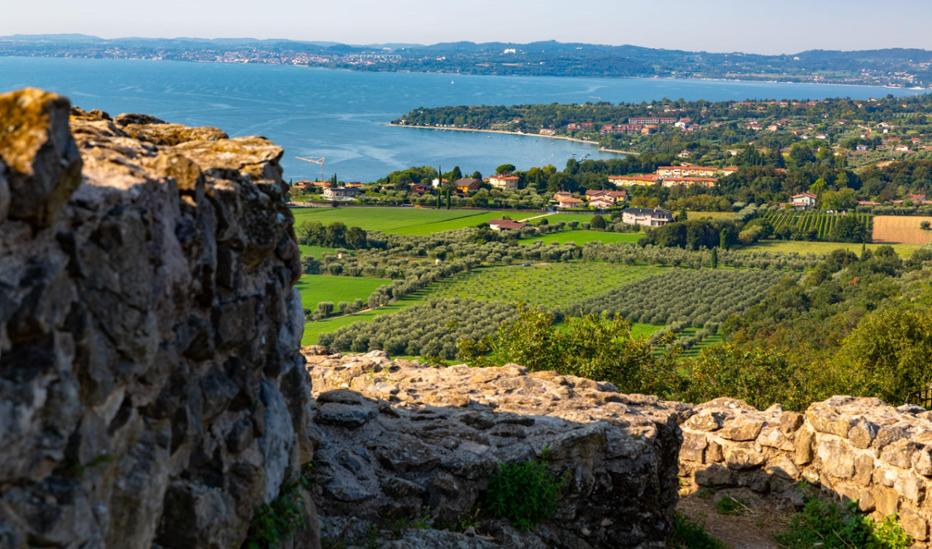
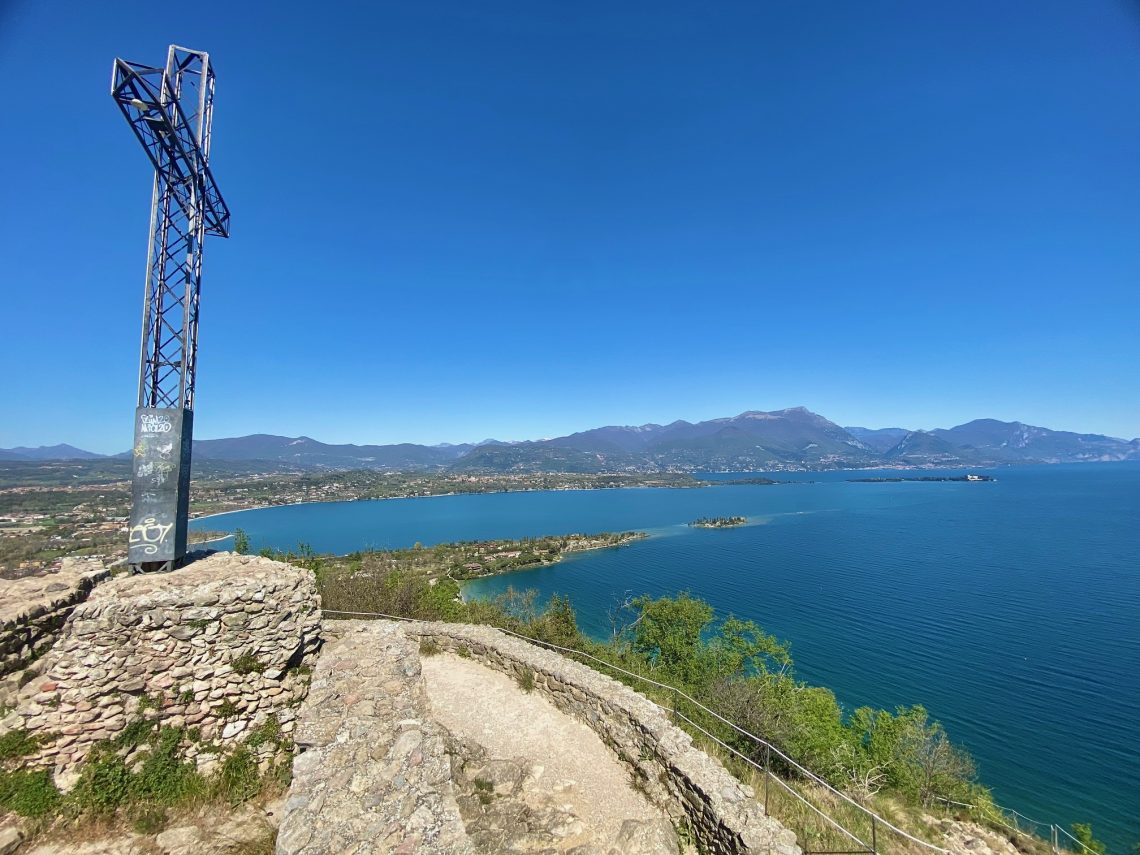
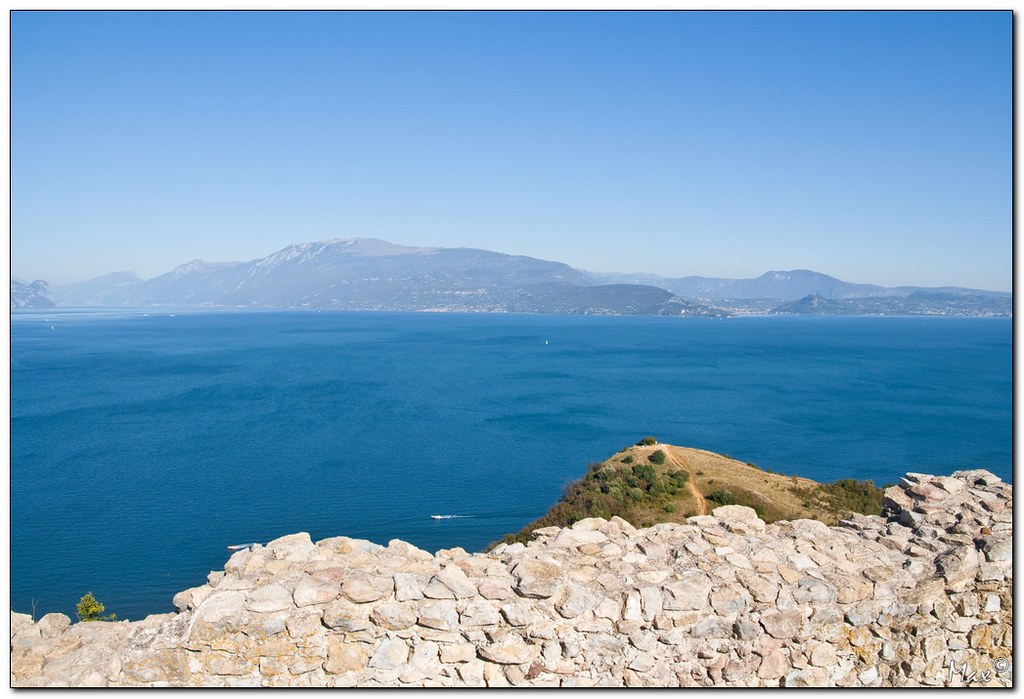
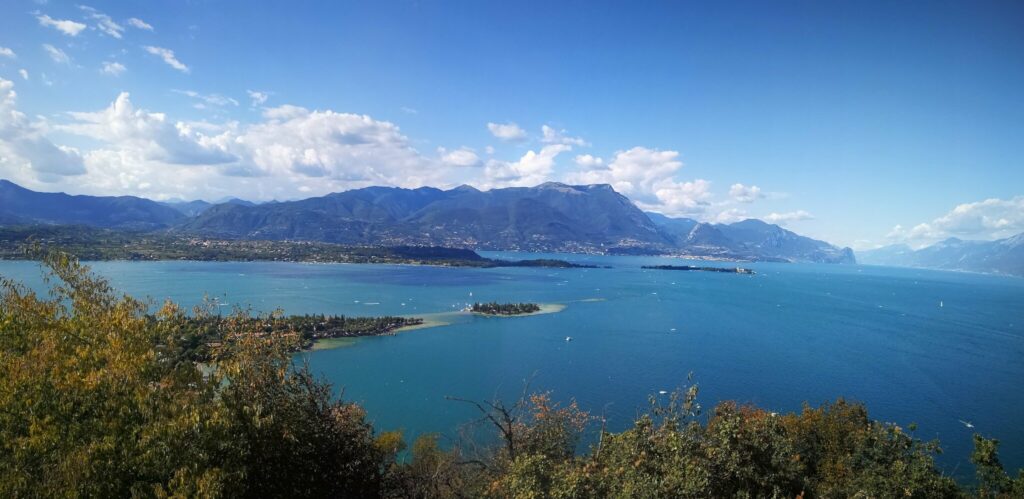
From the summit you instinctively stop. Southern Garda opens like a map. To the north the lake narrows into a fjord-like corridor between mountains; to the south it widens into an open, luminous basin. The small islands of San Biagio and Isola Minore rest in calm water, while the morainic hills extend behind them in soft undulating lines.
Monte Baldo dominates the horizon like a geological anchor. From here the landscape is not just beautiful — it becomes intelligible. You can understand how glaciers carved the basin, how the hills formed, why former routes and fortifications lie where they do. It also explains why shepherds, monks, soldiers and travellers have climbed to this point for centuries.
🪨 A place of identity
A landmark that condenses geology, history, biodiversity and the deeper meaning of Lake Garda.
The Rocca is more than a beautiful viewpoint. It is one of the few places where Lake Garda reveals its true identity: glacial origins, military past, delicate ecosystems, shifting light and the balance between human presence and wild nature. It has always been both boundary and bridge — between land and water, hills and basin, past and present.
The Rocca never forces its beauty. It emerges slowly, like landscapes with something to say and no urgency to say it. You see it once, and it stays with you — not because it is spectacular, but because it feels alive, a place where the long life of the territory is still visible: what it was, what it has become and how it continues to change.
The Green Path
🌳 The Park of the Rocca and the Sasso
The Natural Reserve of the Rocca and the Sasso protects one of the most distinctive landscapes on Lake Garda — a meeting point between geology, vegetation and microclimate that exists nowhere else on the lake.
It is a protected area where Mediterranean scrub, pre-Alpine woodland and rocky steppe coexist in just a few square kilometres. This contrast creates a botanical richness that feels almost improbable for northern Italy.
🌡️ A microclimate that creates an unexpected Mediterranean world
Warm, exposed slopes facing south receive sunlight for most of the day, often feeling more like Liguria or southern France than Lombardy. These conditions allow species to thrive that are unusual for the Garda region.
You find rosemary growing wild on the cliffs, rockrose, red valerian, thyme, and even caper bushes rooted in vertical fissures. The limestone itself retains heat through the night, reinforcing this Mediterranean imprint.
Just a few metres away, where the terrain becomes shaded or more humid, the vegetation shifts abruptly. Here the air cools, and species typical of pre-Alpine environments appear: hazel, privet, hornbeam, and early-spring woodland flowers that grow in pockets of deeper soil.
🌿 Rare and characteristic plant species
Because of this extreme variability, the reserve hosts plant communities usually separated by hundreds of kilometres.
Notable species include:
dwarf juniper clinging to rock
wild orchids emerging in spring between limestone cracks
bladder campion and other steppe-like plants thriving on thin, arid soil
shrubs adapted to salt-free but sunbaked environments
delicate mosses and lichens that colonise the cliff surface
This mosaic of species is extremely sensitive: even small disturbances, such as stepping off the trail, can damage these micro-habitats.
🐦 A refuge for wildlife
The Rocca and the Sasso are also a haven for fauna. Lizards bask on the white rock, butterflies flourish along the crest during summer, and numerous birds take advantage of the cliff’s updrafts.
Kestrels, peregrine falcons, swifts, herons and cormorants all use this promontory as a reference point for movement, nesting or feeding. The upwelling air along the Sasso makes it one of the best natural lookouts for birdwatching on the southern lake.
🚶♀️ Trail network: from easy walks to panoramic ridges
The park offers a network of well-marked paths that vary from gentle walks to more exposed routes along the ridge.
Easy trails lead from the lower parking areas to the summit, passing through Mediterranean scrub and open viewpoints.
Intermediate routes follow the line of the Sasso, giving close views of the cliff and the lake below.
More panoramic trails traverse the upper ridge, opening toward Monte Baldo, the morainic hills and the southern basin.
Along the way, interpretive signs help visitors understand the geological layers, the fossils inside the rock, and the plant communities that change with every curve.
🪨 A landscape shaped by time and protected for the future
The Park of the Rocca and the Sasso is not just a beautiful green area: it is a living archive of Lake Garda’s natural history. Its cliffs, plants and trails tell a story that combines tropical seas, glacial forces and centuries of human presence.
Walking through the reserve means crossing environments that formed millions of years apart, yet now coexist in a single, delicate balance. It is a place that asks to be enjoyed slowly — and protected with care.