The Love Knot: The Delicate Art of Valeggio’s Tortellini
A lace-thin pasta sheet, a knot of love, and the lightest touch of the Mincio valley. Valeggio’s tortellini are not an Emilian cousin, but a world of their own: delicate, transparent, rooted in river stories and garden flavours. A signature dish where Verona’s finesse meets Mantua’s rural soul — refined, seasonal, and unmistakably Valeggio.
The Tortellino of Valeggio:
A Thousand Years in a Single Knot
Italy is full of filled pastas — proud, regional, celebrated in every town square and Sunday kitchen. Yet the tortellino of Valeggio belongs to another category entirely.
It feels ancient, almost archaeological, as if it carried within its fragile shape the sediments of the Mincio Valley itself: its water, its fields, its borders, its quiet brilliance.
It is not simply a dish; it is a distilled form of identity, the edible memory of a landscape where agriculture, river culture, and centuries of resilience have shaped one of the most delicate creations in Northern Italian cuisine.
To understand how this knot came to exist, you have to imagine Valeggio before tourism and bicycles and summer crowds. Picture a medieval village anchored to the slow breath of the Mincio, a river that spreads and softens as it approaches the morainic hills.
In its wake it leaves canals, millraces, meadows fattened by silt, and a natural irrigation system capable of sustaining fields, orchards, and an astonishing rural economy. For hundreds of years this land produced flour for the mills, vegetables for the tables, and mulberry trees for the silkworms.
Silk was not a footnote here — it was the core of the town’s wealth.
The northern Italian silk route passed straight through Valeggio, and the almost weightless pasta sheet of the tortellino seems to carry a memory of that world: a thin, luminous echo of their delicate cloth.
Legend, of course, gives the dish a love story. They speak of a soldier and a nymph, of a forbidden meeting on the riverbank, of a golden scarf knotted as a promise left behind in the grass.
The women of Valeggio, it is said, mimicked that gesture in dough, transforming the knot into pasta — “nodi d’amore,” knots of love.
The tale sounds romantic, perhaps too perfect, but it isn’t as fanciful as it seems. It mirrors the real nature of the tortellino: thin as silk, intimate in the making, a small, precise act of care shaped in a village where memory weighs more than luxury.
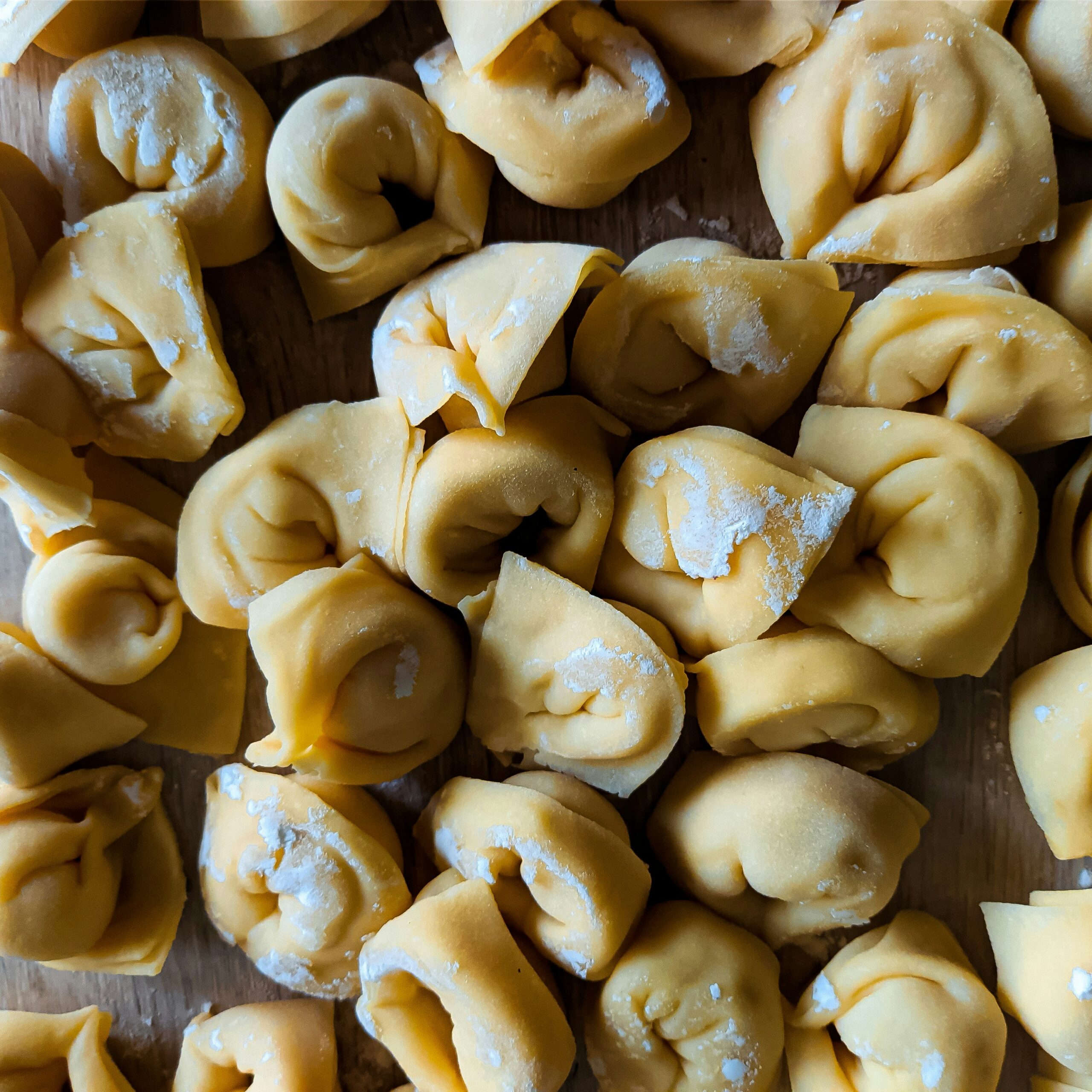
Its thinness is the first mystery people try to solve. Why here? Why so fine? The answer lies in geography. Valeggio lives between two culinary worlds: Verona, with its quiet elegance and measured flavours, and Mantua, shaped by a rural soul yet influenced by the opulent tastes of the Gonzaga courts. Between these two forces, the women of Valeggio chose finesse.
Wheat was precious; no one wasted a grain. A thin sheet meant frugality, but also mastery — a way of turning scarcity into art. It produced a pasta that was not heavy, not ostentatious, but transparent, digestible, surprisingly modern for something born centuries ago. It was not aristocratic food; it was the intelligent response of a countryside that understood how to stretch ingredients without losing dignity.
The filling followed the same philosophy. While Emilia-Romagna favoured exuberant mixtures of pork, mortadella, Parmigiano, and broths rich enough to perfume an entire house, Valeggio moved in the opposite direction.
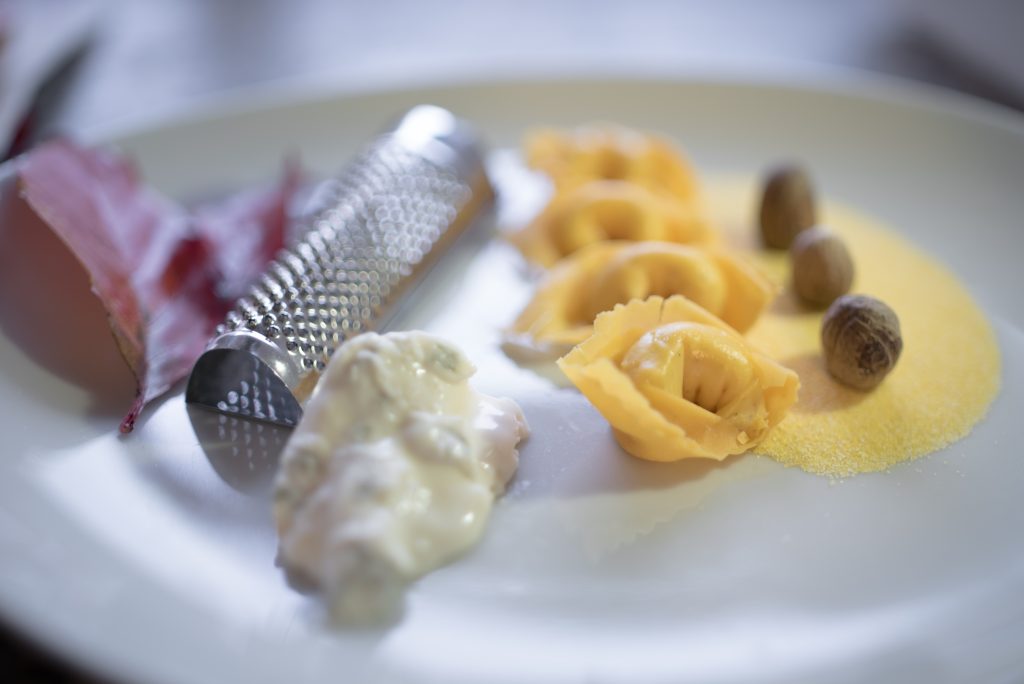
Its flavours remained tied to gardens and small farms: minced meats softened with herbs, a breath of nutmeg, sometimes a touch of poultry; other times vegetables, depending on what was available. Nothing greasy, nothing shouting for attention. A filling meant for daily life, not only celebrations — substantial enough to sustain, light enough to enjoy.
Just a few kilometres away, Mantua was creating its own masterpiece: the tortello di zucca, with pumpkin, spice, mostarda, and a sweetness adored by the courts.
The difference between the two pastas is the difference between palace and field. Mantua cooked for nobility; Valeggio cooked for families. That contrast explains why one is lush and symbolic, while the other is slender, humble, and restrained. Geography alone cannot explain it; history does.
Ducks also played their part in the story. In the farms along the riverbanks they were as common as chickens are today — easy to raise, generous in fat and flavour, a staple before pork dominated the countryside. Older versions of the tortellino sometimes held a whisper of duck, mixed finely with herbs and a reduction of broth. It gave the pasta a faint, elegant game note, different from Mantua’s sweetness and far lighter than Emilia’s richness.
What amazes visitors today is not just the flavour but the survival of the gesture. At dawn you may still find women leaning over wooden boards, rolling dough until the light passes through it.
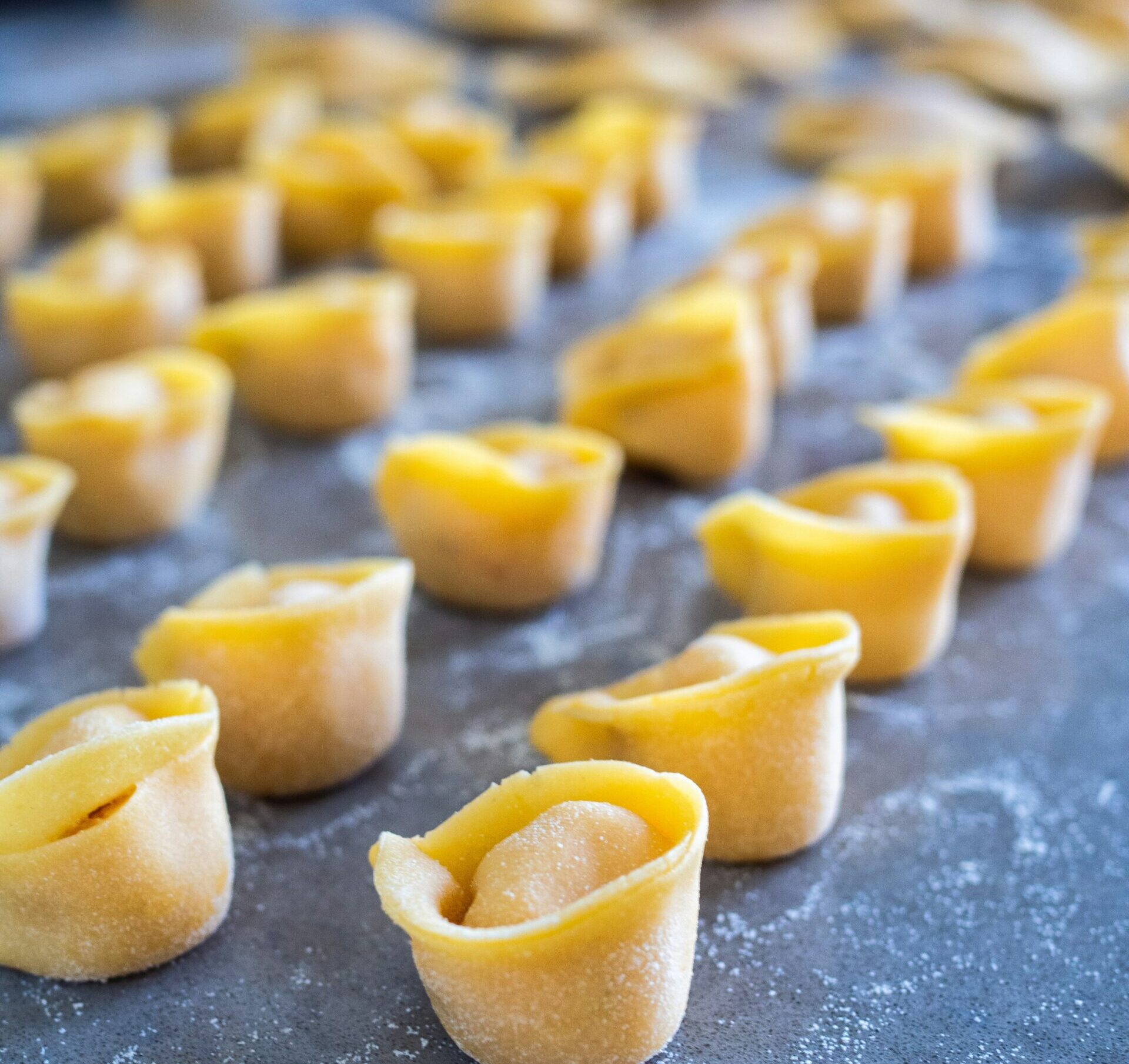
Their movements are quiet, almost ceremonial — stretch, fold, cut, fill, close, knot. The sequence hasn’t changed in centuries, and each tortellino looks like a tiny relic of that continuity. This is not industrial pasta, nor a recipe taught by measurements; it is transmitted by hands trained by repetition and memory.
Within this knot lives a crossroads of influences: the frugality of medieval rural life, the spices carried by Venetian merchants, the agricultural wealth of the Mantuan plains, the finesse of Veronese seasoning, and the culture of silk that inspired the very texture of the dough.
The tortellino of Valeggio does not belong wholly to any of these worlds. It stands at their meeting point — a border dish, shaped by multiple identities, softened by water, refined by necessity.
Eating it in Valeggio is not simply eating. It is stepping into a story that stretches from river legends to farm kitchens, from silk looms to modern celebrations like the long summer dinner on the Visconteo Bridge, where thousands of “nodi d’amore” are served under the evening sky. Few dishes in Italy carry so many layers with such quiet grace.
The tortellino of Valeggio is proof that extraordinary traditions often survive not in grand cities or famous palaces, but in small villages where people never stopped doing things well — even when the world around them hurried toward something else.