Walk from Desenzano to Rivoltella
A lakeside walk that connects Desenzano and Rivoltella, offering the widest view of Lake Garda’s southern basin: a landscape shaped by glaciers, enriched by historic villas, lively beaches, and the everyday life of the lake’s communities
One Lake All Life
This walk is a true summary of what it means to live and experience Lake Garda. In just a few kilometers it brings together its nature and history, the transformation of two villages from fishing hamlets into lively urban centers, and the uniqueness of a landscape carved by glaciers. It is an easy route, accessible to everyone, but at the same time it offers a privileged perspective on the widest and brightest part of the lake.
Walking along the path that connects Desenzano and Rivoltella, you encounter historic villas, beaches enjoyed by generations, swans and grebes gliding over the water, elegant cafés, and popular spots. It is the essence of what we call One Lake Life: the unique experience of a lake that is nature, culture, daily life, and tourism all at once.
A unique glacial basin in Italy
The section of the lake along this walk belongs to the so-called southern basin, the widest part of Lake Garda. To understand its uniqueness, one has to look back in time: about 10–12,000 years ago, during the last Ice Age, the Garda glacier filled the entire valley. When the ice retreated, it left behind a large depression carved into the plain, bordered by morainic hills.
The shape of the lake reflects this origin:
to the north, Lake Garda is narrow because it is confined between mountain ranges that guided and contained the glacier;
to the south, once the glacier reached the Po Valley, it spread widely and deposited vast amounts of moraine. This is why the lake opens into a broad, almost triangular shape, surrounded by morainic hills.
The Sirmione peninsula is the clearest example of this history: a long, narrow morainic ridge stretching four kilometers northward, created by glacial deposits accumulated in this area. It is a geological and landscape feature unlike any other, making the view from Desenzano and Rivoltella unmistakable.
Reading the landscape
This walk is also an open-air lesson in geography. A simple glance reveals:
in the foreground, the gentle southern morainic hills, now covered with vineyards and olive groves;
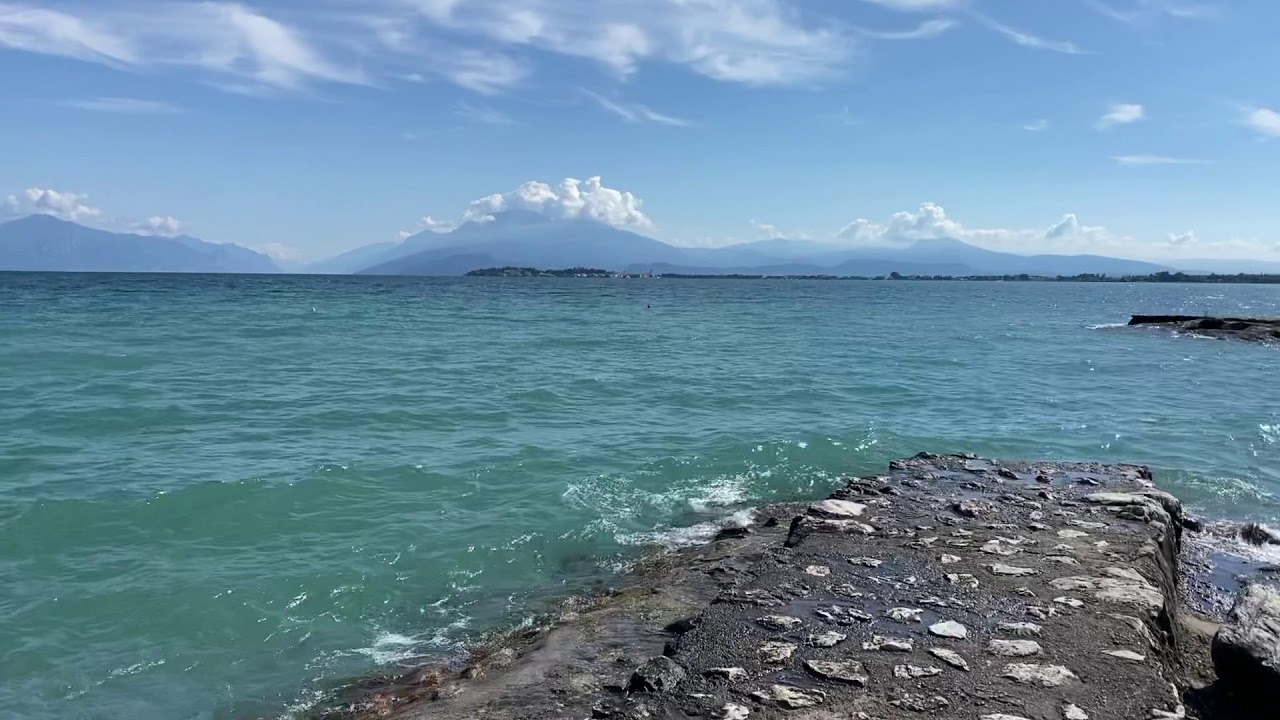
at the center, the southern basin, wide and bright, opening like a small inland sea;
further north, the lake narrows again, channelled between mountains, creating a corridor that leads the eye toward the Alps;
on the horizon, the Monte Baldo, a carbonate massif over 2,000 meters high, dating back to the Mesozoic era, marking the transition from the morainic landscape of the plain to the Alpine world.
This is a unique vantage point: here you can perceive the widest stretch of shoreline visible from lake level, and in one glance understand the entire “architecture” of Lake Garda, from its wide southern opening to its northern narrowing.
History and transformation of the villages
But this route is not just about nature. It also tells the story of human settlement on Lake Garda.
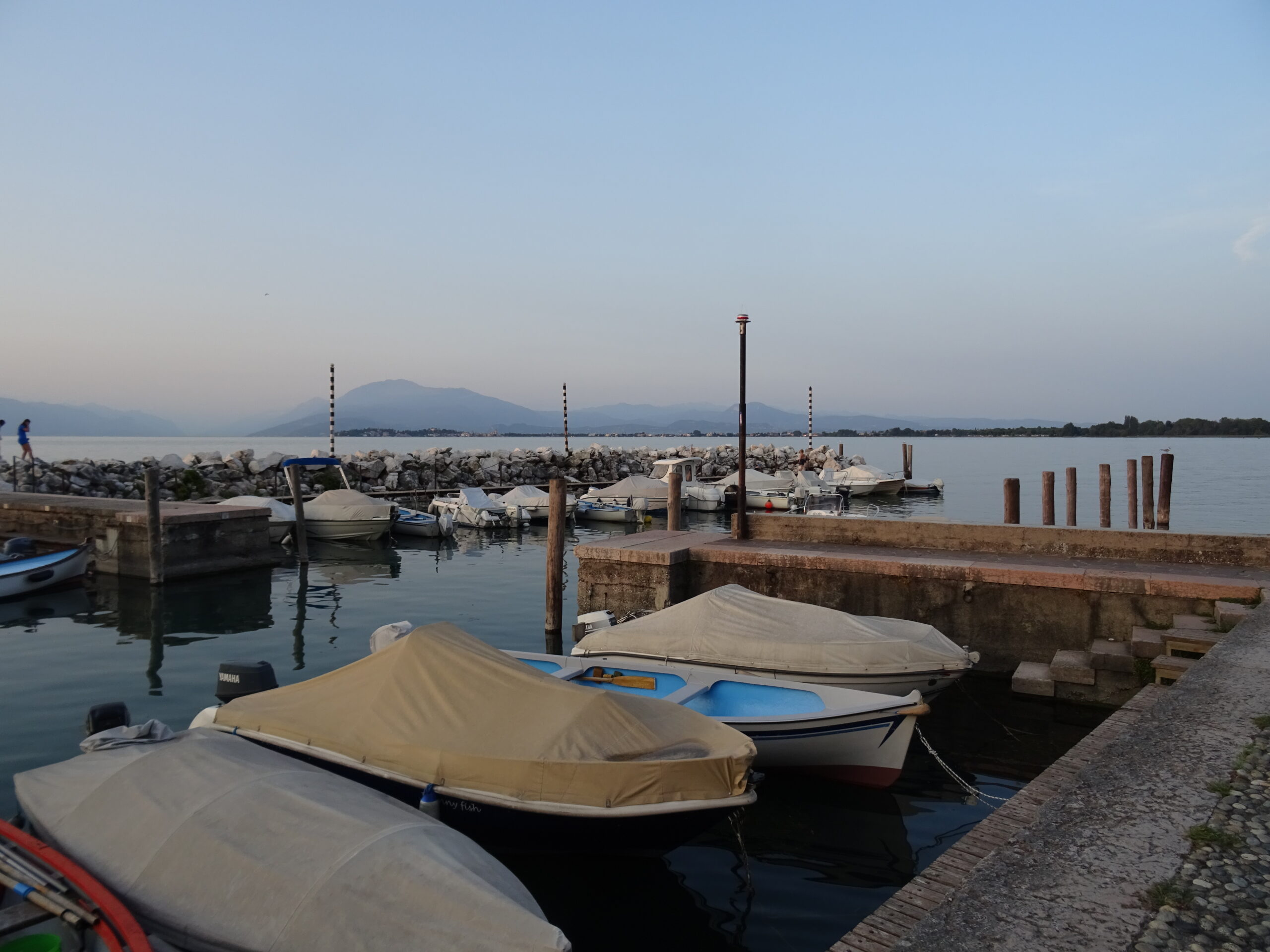
Rivoltella was an independent municipality until 1926, when it was annexed to Desenzano. It was a fishing village with a strong identity, centered around its harbor, boats, and local traditions.
Desenzano, by contrast, had already been an important hub in Roman times, thanks to its position along the Via Gallica and its port, which connected both shores of the lake. The remains of the Roman villa and traces of ancient trade routes still testify to its central role.
Walking from Desenzano to Rivoltella means retracing this transition: from small lakeside hamlets tied to fishing and everyday survival, to modern tourist and commercial towns, today animated by shops, cafés, restaurants, and historic villas.
Historic villas and memory
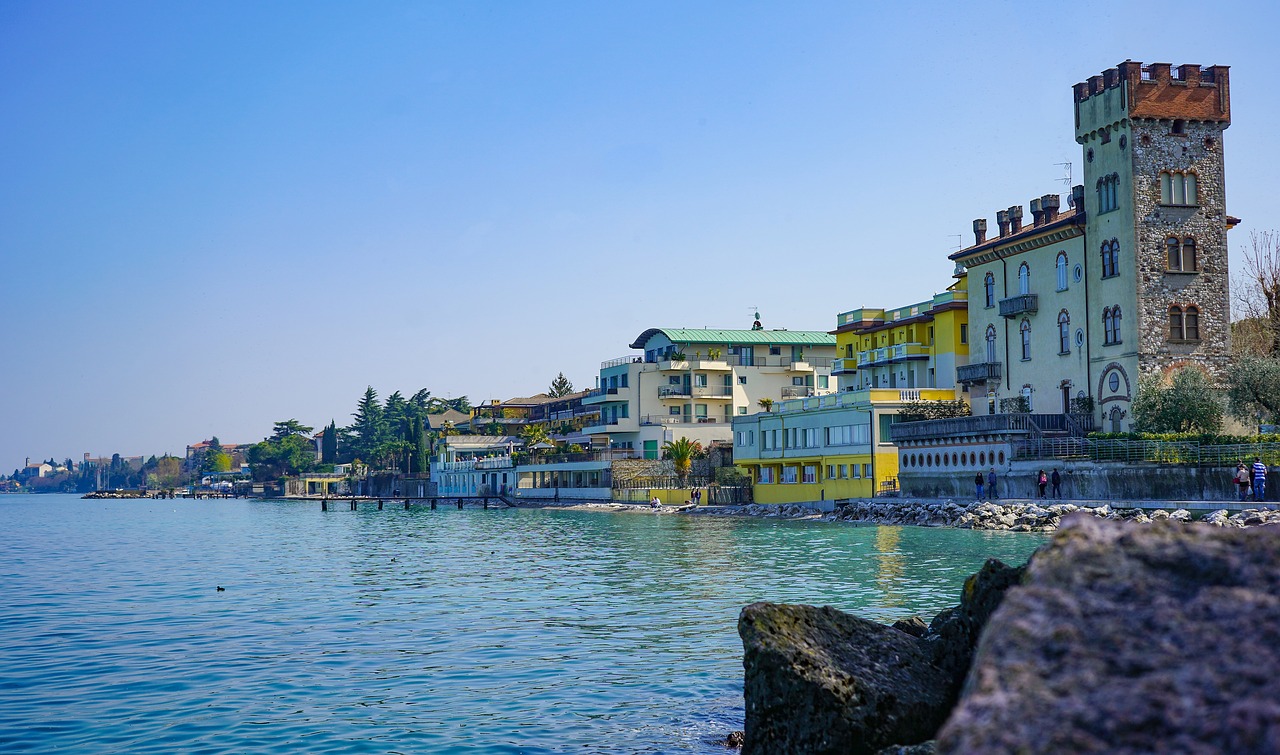
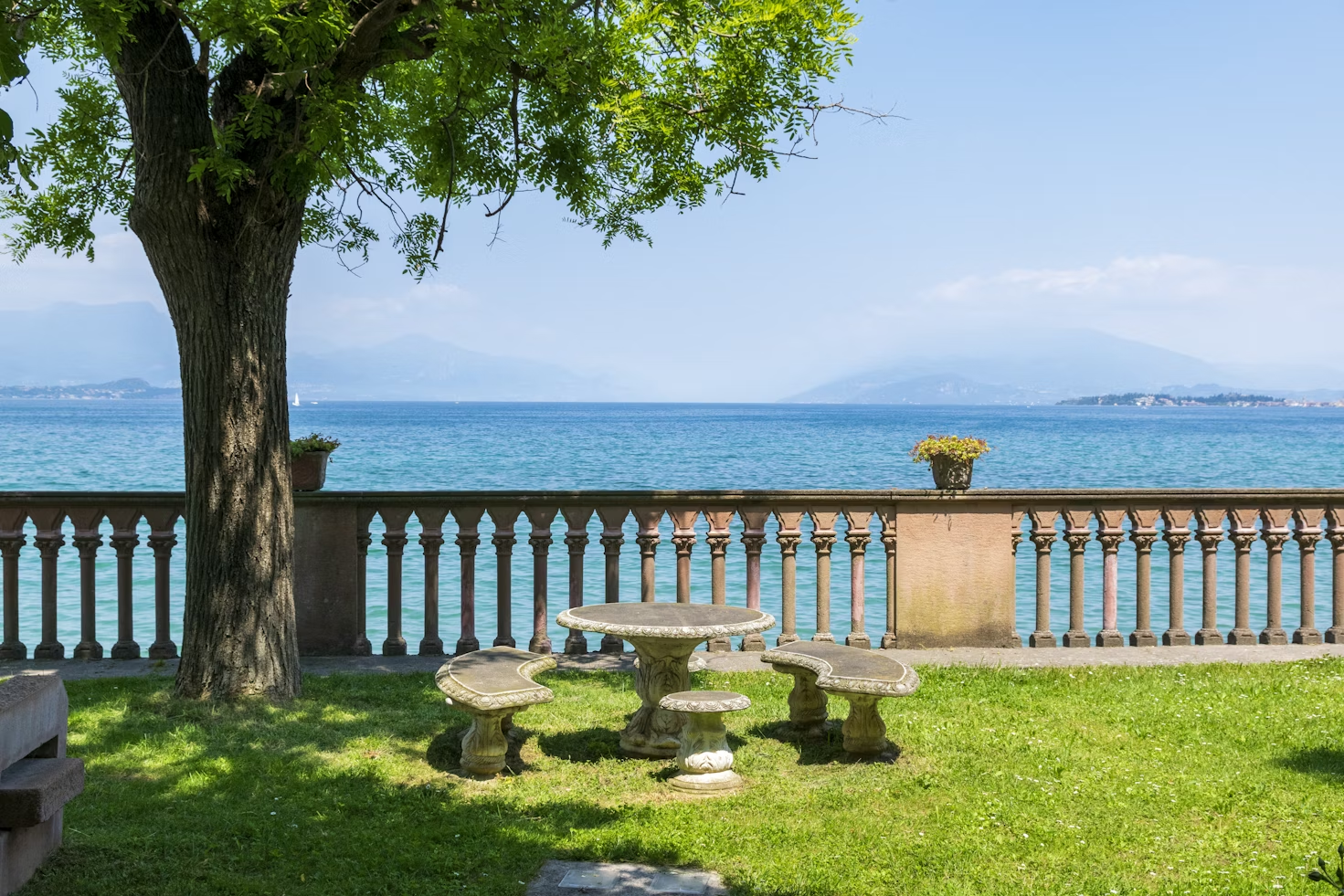
Along the path you pass several historic villas, once owned by noble or bourgeois families between the 19th and 20th centuries. Not always open to visitors, often visible only from the outside, they remain a clear mark of the lake’s transformation: from a working shoreline devoted to fishing, washing, and transport, into a place of leisure, elegance, and prestige.
Beaches and daily life
The walk is dotted with spots that have long defined local life in Desenzano and Rivoltella:
the Spiaggia d’Oro, one of the most popular, historically a gathering point for generations;
the small Rivoltella beach, more intimate, right next to the Giulietta al Lago café, a perfect stop for a coffee or aperitif by the water;
stretches of free beach that still preserve the atmosphere of the old Garda.
These beaches were, for decades, the natural meeting places of local families, where children played, fishermen worked, and tourists mixed with residents. They are still the living soul of the lake today.
Nature and wildlife
Although not a “wild” route, nature here is always present. Along the shore and in the quieter waters you can easily spot:
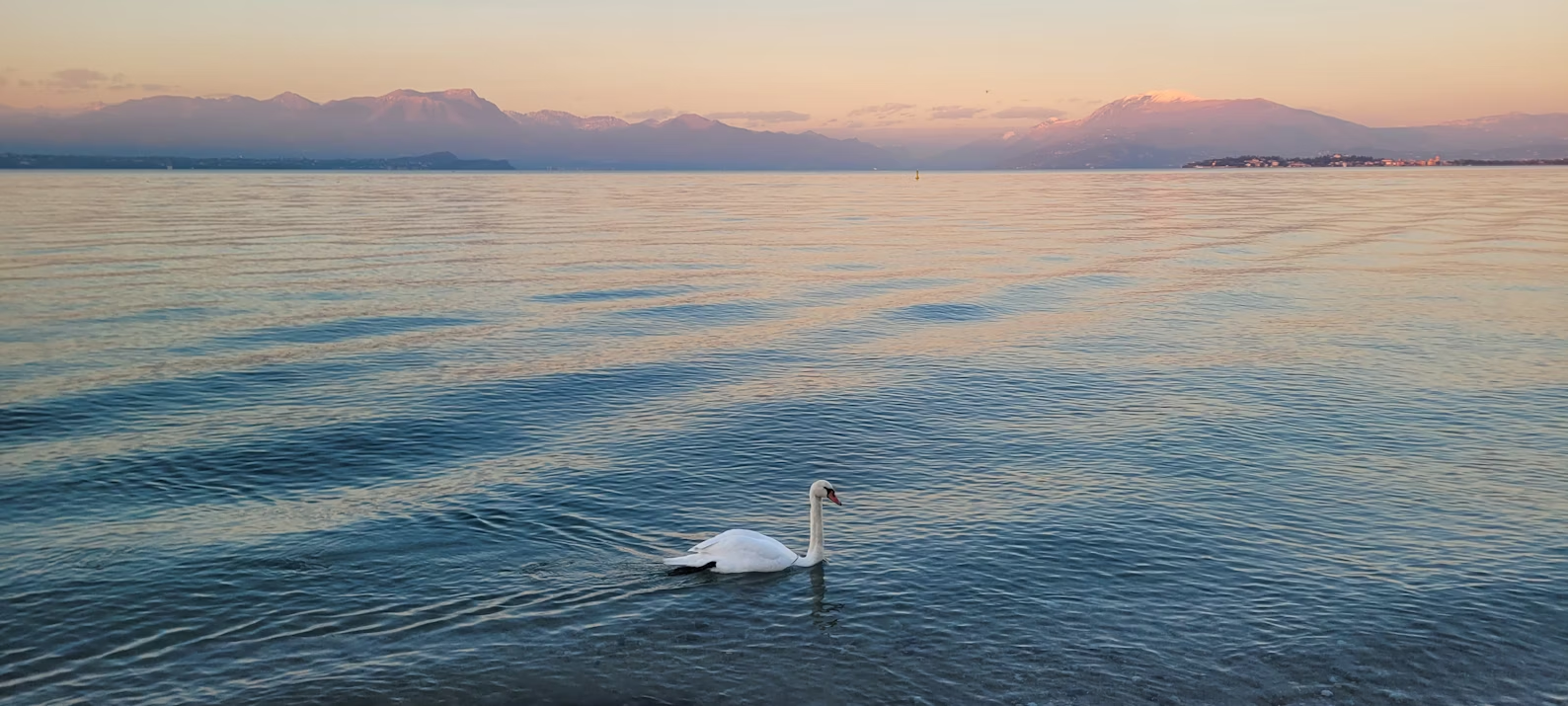
mute swans, graceful symbols of the lake;
great crested grebes, diving birds that build floating nests;
mallards and other ducks;
coots and a variety of aquatic species animating the water.
In spring and autumn you may also see migratory birds, using Lake Garda as a natural corridor. It is a small biodiversity reserve, right next to the urban fabric.
Practical information
Distance: about 3 km one way, easily walked in under an hour.
Difficulty: very low, suitable for everyone.
Accessibility: almost entirely flat, suitable for strollers.
Best time: pleasant year-round, particularly striking at sunset, when the colors of the lake change dramatically.
Facilities: bars, restaurants, and beaches along the way.
Conclusion
The walk from Desenzano to Rivoltella is neither long nor demanding, but it encapsulates the essence of Lake Garda: a landscape shaped by glaciers, the story of villages that grew from fishing communities into tourist towns, and the daily life of people who have lived by the lake for generations.
It is a simple walk that allows you to understand the geology, history, and identity of the southern Garda all at once: nature, culture, and everyday life coexisting along a single shoreline.